

 Add Elite as Preferred


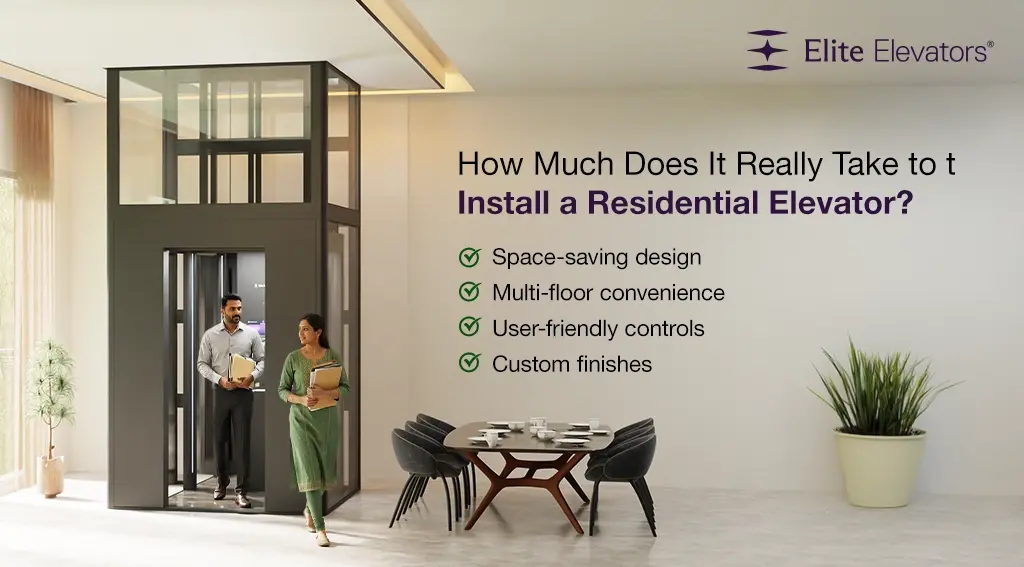
In 2026, residential elevator installation in India will cost ₹14.5–₹26+ lakhs, depending on technology, capacity, and customization. Elite Elevators India offers advanced, machine-room-less systems that cut structural costs, enhance efficiency, and boost long-term property value.
Understanding Residential Elevator Installation Cost in India
The residential elevator installation cost represents a significant investment in home infrastructure, with prices in India starting from ₹14.5 lakhs for basic systems and extending beyond ₹26 lakhs for premium configurations. The cost of residential elevator systems varies substantially based on technology selection, load capacity, structural requirements, and customisation specifications. This comprehensive analysis examines pricing structures, value determinants, and strategic considerations for homeowners evaluating home elevator installations in 2026.
Table of Contents
- Understanding Residential Elevator Installation Cost in India
- Residential Elevator Cost in India: Detailed Price Structure
- Critical Factors Determining Residential Elevator Installation Cost
- Comprehensive Cost Analysis by Application Scenario
- Long-Term Value Considerations Beyond Initial Residential Elevator Cost
- Strategic Selection Framework for Optimal Investment
- Elite Elevators India: Value Proposition Analysis
- Industry Trends Influencing Residential Elevator Adoption
- Frequently Asked Questions
According to industry data from the Indian Elevator and Escalator Association, residential elevator installations have increased by 47% since 2022, driven by ageing demographics, multi-story residential construction, and enhanced accessibility requirements. Understanding the complete residential lift cost framework enables informed decision-making that balances immediate expenditure against long-term operational value.
Residential Elevator Cost in India: Detailed Price Structure
Current Market Pricing (2026)
Entry-Level Systems: ₹14.5 – ₹16 lakhs+
- Hydraulic technology (X200, X200 Plus models)
- 400kg capacity
- Standard cabin finishes
- Basic control systems
Mid-Range Systems: ₹20 – ₹26 lakhs+
- Enhanced hydraulic systems (E200)
- 400kg capacity (4 persons)
- Improved acoustic performance
- Quality interior options
Premium Systems: ₹18.7 – ₹26 lakhs+
- Gearless technology (X300 MK II series)
- 440kg capacity (5-6 persons)
- Smart integration capabilities
- Advanced safety features
Luxury Systems: ₹45 lakhs and above
- Cogbelt technology (E300)
- Premium design elements
- Full customisation options
- Enhanced performance specifications
Research from the National Association of Home Builders indicates that properly installed residential elevators increase property values by 10-25%, providing substantial return on investment beyond operational convenience.
Critical Factors Determining Residential Elevator Installation Cost
1. Technology Architecture
Hydraulic Systems: utilise fluid pressure mechanisms for vertical transport. These systems offer:
- Lower initial capital expenditure
- Smooth operational characteristics
- Reduced power consumption
- Simplified maintenance protocols
Gearless Systems: Gearless technology employs direct-drive motors for enhanced performance:
- Superior speed capabilities (up to 1 m/s)
- Reduced energy consumption (20-30% efficiency gain)
- Extended operational lifespan
- Advanced integration possibilities
Studies from the Elevator Technology Research Council demonstrate that gearless systems achieve 18-22% lower total cost of ownership over 15-year operational periods, despite higher initial investment.
2. Load Capacity Specifications
Capacity selection directly impacts structural requirements and component specifications:
400kg Configuration (2-4 persons)
- Suitable for standard residential applications
- Reduced structural load requirements
- Lower material costs
- Standard component availability
440kg Configuration (5-6 persons)
- Enhanced usage flexibility
- Increased structural reinforcement
- Premium component specifications
- Higher installation complexity
3. Vertical Travel Distance
Residential Elevator cost increases proportionally with vertical travel requirements:
- 2 floors: Base configuration costs
- 3 floors: 15-20% cost increment
- 4+ floors: 25-35% cost increment
Each additional floor necessitates extended guide rails, increased cable lengths, and enhanced motor specifications.
4. Structural Integration Requirements
Traditional elevator systems require:
- Machine room construction (adding ₹3-5 lakhs)
- Pit excavation (₹2-4 lakhs additional)
- Overhead clearance modifications
- Reinforced shaft construction
Elite Elevators’ machine-room-less (MRL) configurations eliminate these requirements, reducing residential elevator installation cost by ₹5-9 lakhs compared to conventional systems.
5. Customisation Elements
Premium customisation options affecting the cost of residential elevator include:
- Glass cabin panels (₹2-4 lakhs additional)
- Premium flooring materials (₹50,000-₹1.5 lakhs)
- Advanced lighting systems (₹40,000-₹80,000)
- Custom control interfaces (₹60,000-₹1.2 lakhs)
Prices mentioned are approximate and subject to change based on design choices and requirements.
Comprehensive Cost Analysis by Application Scenario
1. Compact Residential Properties
Property Profile:
- Floor area: 1,200-1,800 sq ft per level
- Occupancy: 2-3 residents
- Usage frequency: Moderate
Recommended Configuration:
- Hydraulic system (400kg capacity)
- Standard cabin dimensions
- Basic control systems
Total Investment: ₹14.5 – ₹16+ lakhs
2. Standard Family Residences
Property Profile:
- Floor area: 1,800-2,500 sq ft per level
- Occupancy: 4-5 residents
- Usage frequency: High
Recommended Configuration:
- Enhanced hydraulic or entry-level gearless
- 400kg capacity with comfort features
- Improved acoustic insulation
Total Investment: ₹16 – ₹20+ lakhs
3. Premium Villa Installations
Property Profile:
- Floor area: 2,500+ sq ft per level
- Occupancy: 5+ residents
- Usage frequency: Very high
Recommended Configuration:
- Gearless technology with smart features
- 440kg capacity
- Premium customisation
Total Investment: ₹20 – ₹26+ lakhs
Long-Term Value Considerations Beyond Initial Residential Elevator Cost
1. Maintenance Cost Analysis
Annual Maintenance Requirements:
- Hydraulic systems: ₹25,000-₹35,000 annually
- Gearless systems: ₹18,000-₹28,000 annually
Data from the Indian Elevator Maintenance Association indicates that preventive maintenance reduces emergency repair costs by 73% over system’s lifetime.
2. Energy Consumption Economics
Monthly Operational Costs:
- Hydraulic systems: ₹600-₹900 (residential usage)
- Gearless systems: ₹450-₹700 (residential usage)
Single-phase power compatibility eliminates three-phase connection costs (₹40,000-₹80,000 installation expense).
3. Property Value Enhancement
Research from the Real Estate Investment Institute demonstrates:
- Residential elevators increase property marketability by 34%
- Sale price premiums average 12-18% in urban markets
- Days-on-market reduction of 28% for elevator-equipped properties
Long-term value varies based on maintenance needs, energy efficiency, and property benefits, and may differ depending on usage, system type, and individual preferences.
Strategic Selection Framework for Optimal Investment
Assessment Methodology
Step 1: Usage Pattern Analysis: Evaluate daily vertical movement requirements, occupant mobility considerations, and future accessibility needs.
Step 2: Capacity Determination: Calculate peak usage scenarios, concurrent user requirements, and freight transport needs (furniture, appliances).
Step 3: Budget Allocation: Establish total investment parameters, including installation, customisation, and contingency reserves (recommend 10-15% buffer).
Step 4: Technology Selection: Compare hydraulic versus gearless options based on performance requirements, energy priorities, and maintenance preferences.
Step 5: Vendor Evaluation: Assess manufacturer credentials, warranty provisions, service network coverage, and customer satisfaction metrics.
Elite Elevators India: Value Proposition Analysis
- Competitive Advantages: Reducing Total Cost of Ownership
- Structural Simplification: Machine-room-less design eliminates ₹5-9 lakhs in construction costs while reducing installation timeline from 6-8 weeks to 2-3 weeks.
- Installation Efficiency: Modular component systems and standardised procedures minimise labour requirements, reducing installation costs by 22-28% compared to conventional systems.
- Maintenance Optimisation: Advanced diagnostic systems and quality component selection extend service intervals, reducing annual maintenance costs by ₹8,000-₹12,000.
- Energy Performance: Single-phase operation and regenerative drive technology reduce operational costs by ₹1,800-₹2,400 annually compared to standard systems.
Industry Trends Influencing Residential Elevator Adoption
Market Growth Indicators
- Multi-story residential construction increased 34% (2022-2025)
- Ageing population (60+ demographic) projected to reach 173 million by 2026
- Universal design requirements are expanding in building codes
- Smart home integration is driving technology adoption
The Indian residential elevator market is projected to reach ₹3,200 crores by 2027, representing 18% annual growth according to the Building Technology Research Institute.
Frequently Asked Questions
1. What is the starting Residential Elevator cost in India for 2026?
The Residential Elevator Cost at Elite Elevators begins at ₹14.5 lakhs for basic hydraulic systems with standard specifications, including installation and commissioning.
2. How does technology selection impact the cost of Residential Elevator systems?
Hydraulic systems offer lower initial costs (₹14.5-₹20+ lakhs) while gearless technology ranges from ₹18.7-₹26+ lakhs but provides superior long-term value through reduced energy consumption and maintenance requirements.
3. Are structural modifications included in the Residential Elevator Installation Cost?
Elite Elevators’ machine-room-less systems eliminate major structural modifications, with installation costs integrated into quoted pricing. Traditional systems may require additional ₹5-9 lakhs for machine rooms and pit construction.
4. What capacity should homeowners select for residential applications?
Standard family residences typically require 400kg capacity (4 persons), while larger properties or accessibility-focused installations benefit from 440kg configurations.
5. How does Residential Elevator cost in India compare to international markets?
Indian residential elevator costs are 40-55% lower than North American markets and 30-45% below European pricing, offering exceptional value for quality installations.
6. Can elevators be retrofitted into existing residential structures?
Yes, modern machine-room-less systems are specifically engineered for retrofit applications, requiring minimal structural modification and installation periods of 2-3 weeks.
Conclusion: Strategic Investment in Residential Mobility
The Residential Elevator Installation Cost represents a substantial but justified investment in property functionality, accessibility, and market value. With pricing ranging from ₹14.5 lakhs to ₹50+ lakhs, homeowners must evaluate technology options, capacity requirements, and long-term operational costs to optimise value realisation.
Elite Elevators India delivers comprehensive solutions combining advanced engineering, cost-effective installation methodologies, and superior long-term performance. The elimination of machine room requirements, efficient installation processes, and reduced maintenance costs position Elite systems as optimal choices for discerning homeowners.
Take Action Today: Schedule a comprehensive property assessment with Elite Elevators India to receive customised pricing, technical specifications, and installation timelines tailored to your specific requirements. Investment in accessibility is an investment in quality of life. Make the strategic decision today.
Note: * Prices listed are starting rates, exclude applicable taxes, and may vary based on customization.



Aishwarya Gopal
Very informative blog for anyone planning a multi-floor house. I was confused about the cost to install elevator in home projects because prices vary everywhere online. This guide explained the factors affecting pricing in a professional way and made it easier to compare different elevator technologies before making a decision.
Muthuvel Pandian
Excellent explanation about residential home elevator cost in India. I liked how the article covered both budget-friendly and premium elevator options without making it confusing. The information about energy efficiency, maintenance savings, and property value increase makes this guide genuinely useful for families planning long-term investments.
Chinnadurai Mani
This was one of the best articles I found on residential elevators price and installation planning. The detailed cost structure and customization options were very realistic compared to other blogs online. I also appreciated the explanation about how machine-room-less elevators can reduce additional construction expenses significantly.
Palanisamy Gounder
Great content with practical insights about average cost of residential elevator systems. The section explaining how additional floors affect installation pricing was very useful. Many people underestimate structural and maintenance expenses, but this blog explains everything clearly for homeowners considering elevator installation in future home projects.
Marimuthu Selvan
This article answered almost every question I had regarding the cost of residential elevator in new construction projects. The explanation about eliminating machine rooms and reducing structural work was very helpful. It is refreshing to see a blog that discusses both upfront investment and long-term operational savings in detail.
Andal Lakshmi
Excellent article covering residential elevator price, maintenance costs, and installation considerations in one place. The comparison of different elevator capacities and technologies was very informative. It helped me understand how to choose the right system based on home size and future accessibility needs.