Add Elite as Preferred
 The best elevator for a new house in India depends on floors, family, and budget, not just price. Elite Elevators offers India’s most complete certified range from ₹14.50 lakhs, with transparent pricing and a free site survey before any commitment.
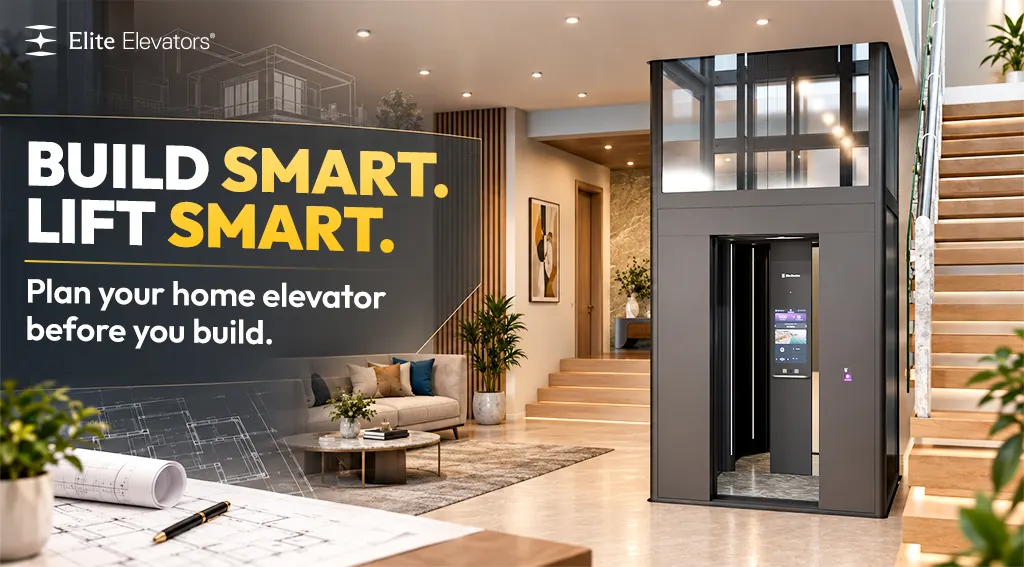
You are building a new house. The architect has the floor plan. The contractor has started. And somewhere between choosing the kitchen tiles and finalising the staircase design, someone asks, “Are you putting in a lift?”
Table of Contents
- What Is the Best Elevator for a House in India?
- Why Should You Decide Before Construction Ends?
For most Indian families building multi-storey homes in 2026, the answer is increasingly yes. What follows that answer, though, is a buying process most people are completely unprepared for. The market is crowded, the terminology is inconsistent, the pricing is vague, and almost every company you speak to has a reason their product is the right one.
This guide cuts through all of that. The best elevator for a house in India, what makes it the right choice, what it costs, and the one decision most buyers make too late.
What Is the Best Elevator for a House in India?
There is no single best elevator for every Indian home. The best elevator for your house is the one correctly specified for your actual situation: your floor count, your family profile, your daily usage pattern, and your budget. Here is how each technology maps to those variables:
- Hydraulic Chain Drive is the most widely installed residential elevator technology in India. Smooth, quiet, single-phase power compatible, no machine room, pit depth from 100 mm. Best for G+1 to G+4 homes. Load capacity: 400 kg. Starting from ₹14.50 lakhs.
- Gearless Belt Drive delivers higher speed (up to 1.0 m/s), smarter features, and larger cabin options. A pit depth of 59 mm is the shallowest available in India. AI navigation, biometrics, and smart displays at the premium end. Best for G+3 to G+5 homes. Starting from ₹18.70 lakhs.
- The European Cogbelt Drive is the quietest residential elevator mechanism available in India. EN 81-41 is certified and independently verified. Up to 6 stops. Starting from ₹48.24 lakhs.
- Stairlifts run along the existing staircase with zero civil work. For homes where a shaft is not planned. All staircase types. Starting from ₹13.41 lakhs.
Why Should You Decide Before Construction Ends?
This is the most important point in any residential lift buying guide, and the one most buyers discover too late. When you plan the elevator during home construction, the shaft is built by your own contractor using cement and brick at local construction rates. This typically costs ₹1.5–4 lakhs.
The same shaft, purchased from the elevator manufacturer after construction is complete, costs ₹10–18 lakhs more depending on the model. For European models like the E300 Cogbelt, the difference between a client masonry shaft and a metal TKE shaft is over ₹18 lakhs.
One conversation with an elevator specialist before the walls close is worth more than any discount negotiated after the house is finished. This is not a minor consideration. It is the single most impactful financial decision in the entire home elevator installation process in India.
What Are the Key Questions to Ask Before Buying?
1. What certifications does the elevator hold?
EN 81-41, EN 81-20, and EN 81-50 are independently verified European safety standards assessed by a recognised third-party body, with verifiable certificate numbers. Any elevator company claiming these certifications should be able to produce the certificate number on request. If they cannot, the certification does not exist at the standard being implied.
2. Is the quoted price all-inclusive?
Confirm whether cabin customisation is included or charged separately. Confirm whether shaft construction is included or additional. Confirm what GST treatment applies. A lower headline price with customisation, shaft, and installation charged separately is rarely the better deal.
3. Does the elevator require three-phase power?
All quality hydraulic and gearless residential elevators operate on standard single-phase domestic power. An elevator requiring three-phase power demands an expensive electrical infrastructure upgrade. Confirm this before any commitment.
4. What does the after-sales support cover specifically?
Annual maintenance contracts should cover scheduled inspections, calibration, fault response, and door mechanism checks. Ask what is excluded. An AMC that covers only labour, not parts, is not a genuine maintenance contract.
5. Can you ride the elevator before deciding?
The single most useful thing any Indian home elevator buyer can do is stand inside the product before committing. Companies with experience centres allow this. Companies without experience centres are asking you to spend ₹14–100 lakhs on a product you have never experienced.
Which Elevator Is Right for Which Indian Home?
1. New G+1 or G+2 home, family of 4, considered budget
A compact hydraulic elevator is the right specification. Smooth hydraulic chain drive, 400 kg capacity, 100 mm pit, no machine room, full safety suite. Starting from ₹14.50 lakhs at G+1. No compromise on certified quality, no over-specification on features the household will not use.
2. G+2 or G+3 home with elderly parents
A smart hydraulic model with EGSS smooth ride technology, an emergency alert system, mobile app monitoring for family members, and auto re-levelling for flush landings. Starting from ₹16.75 lakhs. The elevator that keeps senior family members safe and keeps the household connected to their safety.
3. G+3 to G+5 villa, active household
A gearless belt-drive model at 1.0 m/s with smart displays at every landing, four configurable ride modes, and centre-opening panoramic doors. For multi-storey households where the elevator makes 20+ trips daily and performance matters alongside design.
4. Luxury villa, design-forward home
AI-powered gearless with biometric floor selection, a 21-inch interactive display, and DRL arrival glow, or a European cogbelt model with EN 81-41 certification and the quietest drive available in India. The elevator that matches the home rather than simply fitting in it.
5. Existing home being renovated
Shallow pit requirements (59–100 mm), no machine room, and compact footprints make retrofit installation practical in most Indian home layouts. A stairlift with zero civil work is the most accessible option where shaft construction is not feasible.
Common Mistakes Indian Homebuyers Make When Choosing a Residential Elevator
- Deciding after construction: The most expensive mistake. Planning the shaft during the build saves ₹10–18 lakhs on European models and ₹3–5 lakhs even on hydraulic models.
- Comparing prices without comparing inclusions: A ₹12 lakh quote with shaft and customisation charged separately is not cheaper than a ₹16 lakh all-inclusive quote. Confirm what is in every number before comparing the two of them.
- Choosing based on speed specification alone: A gearless elevator at 1.0 m/s in a G+2 home used by two adults and two children is over-specified. The speed advantage across a two-floor journey is under 20 seconds. Match the specification to the actual daily requirement.
- Not asking for the certification document: An EN 81-41 logo on a brochure and an EN 81-41 certificate with a verifiable number are different things. Always ask for the number.
- Skipping the experience centre visit: This is ₹14–100 lakhs. Riding the elevator before committing to it is not optional; it is the most basic due diligence available to any buyer.
FAQ — Best Elevator for a New House in India
1. What is the best elevator for a new house in India in 2026?
The best elevator depends on floor count, family profile, and budget. A compact hydraulic elevator suits G+1–G+2 homes from ₹14.50 lakhs. A gearless model suits G+3–G+5 active households from ₹18.70 lakhs. For luxury villas, an AI-powered gearless or EN 81-41 certified European cogbelt is the right specification. The best elevator is always the one correctly specified for the actual home, not the most featured or the cheapest.
2. When is the right time to decide on a home elevator during construction in India?
Before the shaft walls are built, ideally during the structural planning stage. This allows the shaft to be built by your contractor at local construction rates, saving ₹10–18 lakhs compared to a manufacturer-supplied shaft after construction. Every week the decision is delayed after the walls close, increasing the total cost of the installation.
3. What certifications should the best home elevator brands in India hold?
EN 81-20 and EN 81-50 are baseline residential elevator standards. EN 81-41 is specific to home elevators held by Elite Elevators on the E200 and E300 range, certified by Liftinstituut, Netherlands. Always ask for the certificate number, not just a logo. A certification worth claiming is one that can be verified.
4. How much does home elevator installation in India cost for a new house?
Residential elevator installation for a new house starts from ₹14.50 lakhs (compact hydraulic, G+1). Smart models start at ₹16.75 lakhs. Gearless from ₹18.70 lakhs. European-certified from ₹26.81 lakhs. With a client-supplied masonry shaft built during construction, the total cost is significantly lower than a retrofit. All prices exclude GST.
5. What is the difference between hydraulic and gearless elevators for a new house in India?
Hydraulic elevators operate at 0.15–0.30 m/s, carry 400 kg, need a 100 mm pit, and suit G+1–G+4 homes from ₹14.50 lakhs. Gearless elevators operate at up to 1.0 m/s, carry 440 kg, need only a 59 mm pit, offer AI and biometrics at the premium end, and suit G+3–G+5 homes from ₹18.70 lakhs. The right choice is determined by actual floor count and daily usage, not by which specification sounds more impressive.
Note: * Prices listed are starting rates, exclude applicable taxes, and may vary based on customization.