Add Elite as Preferred
 Home elevators work using a hydraulic drive system, gearless belt, or cogbelt to move a cabin between floors. They require minimal civil work, no machine room, and installation in 2–3 weeks. Elite Elevators’ residential lifts start at ₹14.50 lakhs with full safety certification.
Story at a Glance
Elite Elevators’ home lifts use advanced hydraulic, gearless, cogbelt systems to move smoothly between floors with minimal construction. Installed in 2–3 weeks without a machine room, they enhance accessibility, convenience, and property value making them a smart, future-ready upgrade for Indian homes.
Most people consider elevators to be something you find in commercial buildings or hotels. Many Indian families are still surprised when they first encounter the idea that their own home could have an elevator safely, affordably, and without months of construction.
And that surprise quickly turns to regret when they realise they’ve spent years watching elderly parents struggle with stairs or missed the chance to install one during a home renovation. The information gap is real. Most families simply don’t know how home elevators work, what they cost, or how straightforward the installation process actually is.
Table of Contents
This guide explains everything clearly and practically so you can make the right decisions for your family with complete confidence.
How Home Elevators Work: The Technology Behind the Ride
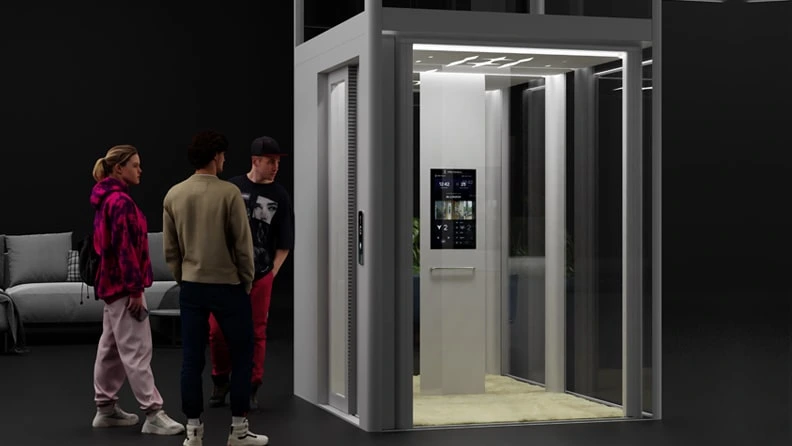
Residential elevator benefits start with understanding the engineering that makes them possible. Unlike commercial elevators, which often require deep pits, overhead machine rooms, and complex structural preparation, residential elevators are engineered specifically for residential spaces, compact, quiet, and minimally invasive.
Elite Elevators offers three drive technologies across its range, each with distinct performance characteristics:
Hydraulic Chain Drive (X200 series)
The cabin is moved by a hydraulic system that uses fluid pressure to control lift and descent. This produces the smooth, controlled movement hydraulic lifts are known for. The X200 and X200 Plus operate at up to 0.30 m/s, carry up to 400 kg, and require only a 100 mm shallow pit. No machine room needed.
Gearless Belt Drive (X300 series)
The cabin is driven by a precision belt system connected to a gearless motor. This technology delivers higher speeds (up to 1.0 m/s), quieter operation, and a more refined ride curve. The X300 MK II and X300 MK II Plus use this system, combined with EGSS (Extra Gentle Soft Start & Stop) technology for zero-jerk movement. Pit depth is just 59 mm.
Every Floor Should Feel Accessible for Everyone
✔ Safe Mobility for Seniors & Loved Ones
✔ Emergency Rescue & Backup Systems
✔ Minimal Civil Work During Installation
✔ Compact Design for Existing Homes
Cogbelt Drive (E300)
Elite Elevators’ most advanced drive system, patented and engineered by TK Access Solutions, Germany. The cogbelt delivers ultra-smooth, whisper-quiet movement with SIL 3 safety certification, the highest residential elevator safety rating globally. Speeds up to 0.4 m/s with travel heights up to 18,000 mm.
All three systems share key principles: they require no deep pit, no overhead machine room, operate on low-voltage cabin systems, and install in 2–3 weeks with minimal civil disruption.
Why Families Across India Are Choosing Home Lifts
Accessibility for elderly family members
This is the single most common reason Indian families install a home elevator. Multi-story homes—G+1, G+2, and G+3 configurations are the standard across India’s residential market. For parents and grandparents managing joint pain, post-surgery recovery, or age-related mobility changes, stairs become a daily obstacle and a genuine safety risk.
Elevators for elderly users in Indian homes demand specific features: smooth starts and stops, emergency rescue capability, and reliable performance during power outages. Elite Elevators’ entire range is built around these requirements, with ARD emergency rescue, GSM backup communication, low-voltage cabin operation, and EGSS smooth-start technology all standard across their models.
Convenience for the whole family
Even for families without immediate accessibility needs, the daily convenience of a home elevator adds up quickly. Carrying groceries, laundry, or luggage between floors; moving furniture; accommodating guests the practical utility of a home lift touches daily life in ways that become immediately apparent after installation.
Future-proofing the home
Many of Elite Elevators’ customers are working professionals in their 30s and 40s who are installing lifts not because they need one today but because they’re building or renovating a home meant to serve their family for decades. Installing the elevator now during construction or a major renovation is significantly more cost-effective than retrofitting later.
Property value enhancement
A well-installed home elevator from a certified brand adds measurable resale value to a residential property. Home elevators are transitioning from a differentiator to a standard feature in the luxury and premium residential segments.
What Installation Actually Looks Like
One of the biggest barriers for families considering a family home elevator is the assumption that installation is massively disruptive. The reality with Elite Elevators is completely unique.
The process begins with a free site assessment. Elite Elevators’ engineers visit your home, assess the layout, and recommend the most suitable model and placement. This visit coordinates directly with your architect or contractor if a new build or renovation is underway.
Most Elite Elevators models require only a shallow pit (59–120 mm, depending on the model) and no separate machine room. The modular lift structure arrives ready to install, and the entire process typically completes in 2–3 weeks. Electrical connection requires a standard single-phase supply available in virtually every Indian home.
See a Home Elevator in Action
The best way to understand how a home elevator works and decide if it’s right for your family is to experience one. Elite Elevators has experience centres across India, where you can ride every model and speak with a consultant about your specific home.
Related Posts:
✅ Lifts vs Elevators: Pros, Cons, and Key Differences Explained
✅ How Much Does a G+1, G+2, or G+3 Home Elevator Cost in India?
✅ House Elevators for Villas: Price, Types & Installation Guide
✅ Which Elevator Technology Trends Are the Most Talked About in the Industry?
✅ How to Choose the Right Hydraulic Lift for Your Home
✅ Home Elevators for Senior Citizens: Safety & Comfort – An Easy Guide
✅ What Makes Elite Elevators a Leader in the Indian Home Lift Market?