

 Add Elite as Preferred


House elevators for villas are redefining modern living with smart accessibility, elegant design, and future-ready convenience. From hydraulic to gearless systems, today’s villa elevators offer smooth performance, minimal space requirements, enhanced safety, and increased property value for luxury homes.
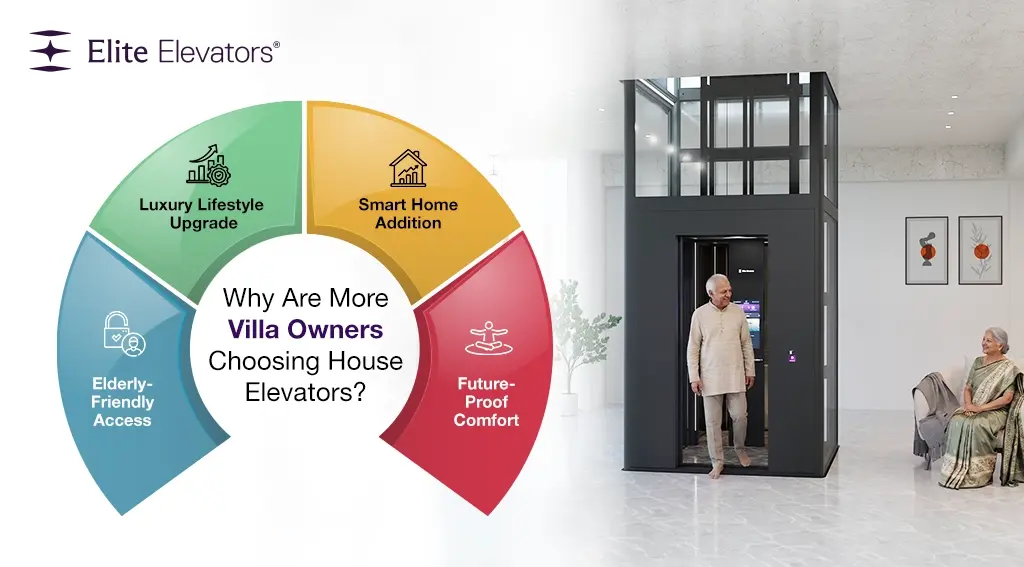
Introduction: When Luxury Meets Practical Living
A villa gives you space, privacy, and comfort, but stairs can slowly take that convenience away. What feels manageable today may become a daily effort tomorrow. Whether it’s carrying groceries, assisting elderly family members, or simply moving between floors multiple times a day, stairs eventually become a limitation.
Table of Contents
- Introduction: When Luxury Meets Practical Living
- What Makes House Elevators for Villas Different?
- Why Are More Villa Owners Choosing Elevators Today?
- What Are the Types of House Elevators for Villas?
- How Much Do House Elevators for Villas Cost?
- What Are the Benefits of Installing House Elevators in Villas?
- How Does Installation Work for Villa Elevators?
- What Safety Features Should You Look For?
- What Should You Consider Before Choosing a Villa Elevator?
- Common Concerns
- Why Timing Matters for Installation
- Actionable Tips Before You Decide
- Conclusion: Elevators Are the Future of Villa Living
- Frequently Asked Questions (FAQs)
This is why house elevators for villas are no longer seen as luxury additions. They are becoming essential for modern living. With solutions from Elite Elevators, homeowners can now experience seamless mobility, 400–440 kg capacity systems, minimal structural requirements, and future-ready accessibility. This guide explores the types of house elevators, pricing, benefits, and installation process, helping you make an informed decision.
What Makes House Elevators for Villas Different?
Unlike commercial lifts, villa elevators are designed specifically for residential use.
Key differences include the following:
- Compact and space-efficient design
- No machine room requirement
- Minimal pit (as low as ~50 mm depending on model)
- Smooth, quiet operation
These features ensure that elevators integrate seamlessly into your home without major construction changes. The focus is not just functionality; it is comfort, design, and everyday usability.
Why Are More Villa Owners Choosing Elevators Today?
The benefits of installing house elevators in villas go far beyond convenience.
Key Reasons:
- Multi-level homes are becoming common
- Families are planning for long-term accessibility
- Smart homes require smart mobility solutions
- Elevators enhance property value
Many homeowners now include elevators during construction itself, making them a standard feature in villas.
What Are the Types of House Elevators for Villas?
Understanding the types of house elevators helps you choose the right system.
1. Hydraulic House Elevators for Villas
Hydraulic elevators are known for their reliability and smooth operation.
Features:
- Stable and jerk-free movement
- Operates on single-phase power
- Minimal pit requirement
- Speed around 0.30 m/s
Best For:
- Low-rise villas
- Homes prioritising comfort and affordability
2. Gearless Home Elevators
These are advanced systems designed for performance and efficiency.
Features:
- Speed up to ~1.0 m/s
- Silent, vibration-free travel
- Advanced gearless drive technology
- Smart control systems
Best For:
- Premium villas
- Homes with frequent elevator usage
3. Platform Lifts for Villas
Platform lifts are designed primarily for accessibility.
Features:
- Wheelchair-friendly design
- Compact footprint
- Simple operation
Best For:
- Accessibility-focused homes
- Limited space applications
How Much Do House Elevators for Villas Cost?
Cost is often the first question homeowners ask.
Typical Price Range (India)
- Starting from ₹14.5 lakhs
- Mid-range systems: ₹16–₹20 lakhs
- Premium systems: ₹20 lakhs+
What Influences the Cost?
- Type of technology (hydraulic or gearless)
- Number of floors
- Cabin size and capacity
- Design customisation
Important Insight
Focusing only on price can lead to poor decisions. The real value lies in:
- Safety
- Performance
- Long-term reliability
A well-chosen system reduces maintenance and improves daily usability.
What Are the Benefits of Installing House Elevators in Villas?
1. Everyday Convenience
Moving between floors becomes effortless, saving time and physical effort.
2. Accessibility for All
Elevators ensure that:
- Elderly family members move safely
- Wheelchair users have full access
- Children and adults benefit equally
3. Increased Property Value
Homes with elevators are seen as:
- Modern
- Functional
- Future-ready
4. Long-Term Practicality
Installing an elevator today avoids expensive modifications later. Over time, what starts as a convenience becomes an essential part of daily life.
How Does Installation Work for Villa Elevators?
Many homeowners assume installation is complex, but modern systems have simplified the process.
Key Installation Advantages
- No machine room required
- Minimal pit depth (~50 mm possible)
- Compact shaft design
Installation Timeline
- Typically completed within 2–3 weeks
Installation Locations
- Staircase void
- Living room corner
- External shaft
This flexibility makes elevators suitable for both new and existing villas.
What Safety Features Should You Look For?
Safety is the most critical factor in choosing an elevator.
Elite Elevators Safety Systems Include:
- Automatic Rescue Device (ARD)
- Emergency lowering during a power failure
- Door interlocks and sensors
- Intelligent braking systems
Certifications
- EN 81-41 (home lift standard)
- EN 81-20 & EN 81-50 (safety standards)
These certifications ensure reliable and safe operation under all conditions.
What Should You Consider Before Choosing a Villa Elevator?
1. Space Availability
Choose systems that fit your home without major changes.
2. Capacity Requirements
- 400 kg → standard use
- 440 kg → larger families or accessibility needs
3. Usage Frequency
- Occasional use → hydraulic systems
- Frequent use → gearless systems
4. Long-Term Value
Focus on durability and efficiency rather than just cost.
Common Concerns
“Will it take too much space?”
Modern elevators are compact and designed for residential layouts.
“Is it expensive?”
When viewed long-term, it adds convenience, safety, and value.
“Is installation difficult?”
With advanced systems, installation is quick and minimally disruptive.
Addressing these concerns helps homeowners make confident decisions.
Why Timing Matters for Installation
Best Time to Install
- During construction → most efficient
- During renovation → flexible
- After completion → still possible
Future Insight
Homes without elevators may soon feel outdated as expectations evolve.
Actionable Tips Before You Decide
- Choose future-ready capacity
- Prioritise safety certifications
- Plan installation early
- Select the right technology
These decisions ensure long-term satisfaction and usability.
Conclusion: Elevators Are the Future of Villa Living
A villa is built for comfort, but true comfort includes effortless mobility. House elevators for villas are no longer optional. They are essential for:
- Accessibility
- Convenience
- Future readiness
With solutions from Elite Elevators, homeowners can transform their villas into spaces that are not only luxurious but also practical and inclusive. The right elevator doesn’t just connect floors—it enhances how you live every day.
Frequently Asked Questions (FAQs)
1. What are the types of house elevators for villas?
The most common types of house elevators for villas include hydraulic elevators, gearless elevators, and platform lifts. Each type is designed for different needs, such as comfort, performance, or accessibility.
2. What is the cost of house elevators for villas?
The cost of house elevators for villas typically starts from ₹14.5 lakhs and varies depending on the technology, number of floors, cabin size, and customisation options.
3. Are hydraulic house elevators suitable for villas?
Yes, hydraulic house elevators are highly suitable for villas. They offer smooth, stable performance and are ideal for low-rise residential buildings with regular usage.
4. How long does installation take?
Installation of a house elevator in a villa is usually completed within 2–3 weeks, depending on site conditions and project requirements.
5. Are villa elevators safe?
Yes, modern villa elevators are designed with advanced safety systems and comply with European standards such as EN 81-41, EN 81-20, and EN 81-50.
6. Can elevators be installed in existing villas?
Yes, modern home elevators are designed for retrofit installation and can be installed in existing villas with minimal structural modifications.
7. What capacity is ideal for villas?
A capacity of 400–440 kg is ideal for villas, as it comfortably supports multiple users and ensures smooth everyday operation.
Note: * Prices listed are starting rates, exclude applicable taxes, and may vary based on customization.



Deepa Lakshmi
This blog was genuinely helpful for understanding house elevators for villas in a practical way. I liked how it explained the different lift technologies, pricing factors, and installation process without making it complicated. The section on safety certifications and long-term value was especially useful. Anyone researching villa home elevators can get a clear idea of what to expect before making a decision.
Haritha Menon
Great article with detailed information about residential elevators for villas. Many blogs focus only on features, but this one explains capacity, installation timelines, and future accessibility benefits as well. The insights about choosing the right technology and understanding villa elevator price factors make it much easier for homeowners to plan confidently.
Ranjani Sekar
I found this guide very informative and easy to follow. The comparison between hydraulic and gearless systems helped me understand which option may suit different homes. The explanation of house lift for villas and how modern elevators require minimal structural changes was particularly valuable. A well-written resource for villa owners.
Sindhu Priya
Excellent breakdown of everything homeowners should know before investing in a villa elevator. The article covers not only villa lift cost but also the importance of safety, accessibility, and long-term convenience. I appreciate the practical advice on planning installation during construction and renovation. Very useful content for anyone exploring luxury villa elevators.
Nandhini Ravi
This is one of the most detailed articles I have read about house elevators for villas. The content answers common questions about space requirements, pricing, installation, and maintenance considerations. The focus on future-ready living and accessibility makes the article relevant for families looking at long-term comfort and mobility solutions.
Varalakshmi Devi
I really enjoyed reading this guide. The information about villa home lift price ranges and the factors that influence overall costs was explained clearly. The article does a good job of balancing affordability, safety, and convenience. Anyone considering residential elevators for villas should find this content extremely helpful and informative.
Yamini Krishnan
A highly informative read for anyone planning a multi-level home. The article explains house lift for villas in a way that is easy to understand, even for first-time buyers. I especially liked the emphasis on future accessibility, safety systems, and planning ahead to avoid costly modifications later.
Preethi Anand
Very useful article that combines technical information with practical advice. The section covering villa home lift price considerations was especially helpful because it focuses on value rather than just upfront costs. The installation flexibility discussed in the blog makes elevators seem much more achievable for many homeowners.