

 Add Elite as Preferred


In India today, modern living is being redefined with convenience, accessibility, and style. Whether in luxury villas in Delhi, duplexes in Bengaluru, or bungalows in Chennai, more and more homeowners are realizing that a home elevator is not just a luxury but a must-have lifestyle accessory. Families are learning that home lifts and elevators are not just for elderly or disabled family members; they also provide comfort, save time, and add value to the property.
Many misconceptions still surround the home elevator and its use, making it seem larger, prohibitively expensive, or only appropriate for large estate homes. Factually, though, home elevator models today—especially those designed for private homes—are compact, affordable, energy-efficient, and customizable to fit the home’s décor.
In this blog, we will lay out 13 little-known facts to help homeowners rethink home elevators. Included are insights on costs, installation, and safety, as well as reasons why home elevators are one of the best investments you can make for your home.
Table of Contents
- Home Elevators: 13 Facts Every Homeowner Must Read
- 1. Home Elevators Have Been Used Longer Than You Think
- 2. They Are Not Only for Seniors or Persons with Disabilities
- 3. Home Elevators Can Add Value to Property
- 4. There Are Different Types of Home Elevators
- 5. They Are Surprisingly Space-Efficient
- 6. They Use Minimal Energy
- 7. They’re Exceptionally Safe
- 8. Customization Options Are Limitless
- 9. Installation Is Fast
- 10. Elevators Are Quieter Than Ever
- 11. The Future of Elevators Is Smart
- 12. They’re Popular in Tiny Homes, Too
- 13. Minimal Maintenance
- Conclusion – A Smarter Way to Live
- FAQs – Home Elevators in India
Home Elevators: 13 Facts Every Homeowner Must Read
Uncover interesting and little-known details about home elevators that show how they combine safety, design, and innovation for the perfect modern living experience.
1. Home Elevators Have Been Used Longer Than You Think
Many think home and residential elevators are a new invention. The fact is, public and private home elevators have been in use for decades. Wealthy estates in both Europe and the United States were installing private elevators in the early 1900s. What has changed, however, is affordability and accessibility; affordable home elevators available today are compact and easy to install for everyday Indian families.
2. They Are Not Only for Seniors or Persons with Disabilities
While residential elevators provide significant convenience for the elderly and individuals with limited mobility, they are much more than just accessibility tools. Parents appreciate the safety of transporting children between levels without stairs. Professionals value the ease of carrying groceries, bags, and laundry. Even pets benefit from the added convenience of vertical mobility!
3. Home Elevators Can Add Value to Property
Purchasing a home elevator is more than a convenience—it also makes strong financial sense. In cities such as Bengaluru, Chennai, and Hyderabad, properties with elevators tend to sell at higher resale values. With ever-increasing property prices, buyers view them as “future-proof” investments and as an enhancement in competitive real estate markets.
4. There Are Different Types of Home Elevators
No two homes are alike; similarly, no two lifts are identical. The overall basic types include:
- Hydraulic Lifts – Reliable, resilient, and energy-efficient
- Cogbelt Gearless Lifts – Quiet and smooth operation, ideal for urban environments
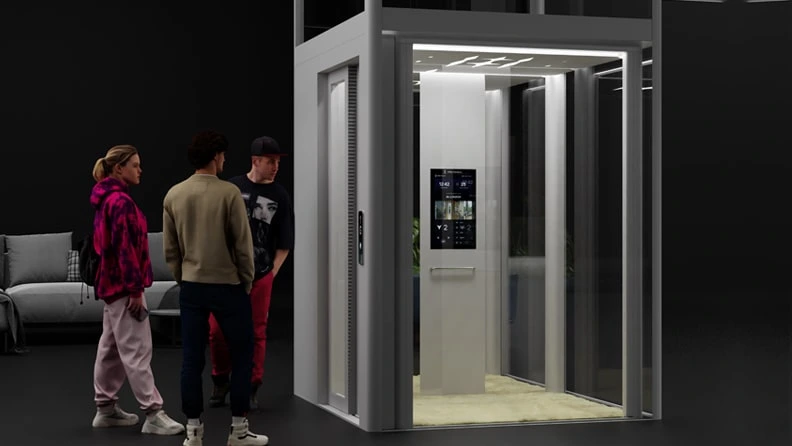
- Luxury Panoramic Lifts – Elegant glass cabins that enhance the aesthetics of premium villas
- Stairlifts & Platform Lifts – Perfect for smaller homes where space is limited; ideal for wheelchair use or short-level transitions
The “best” home elevator depends on your layout, lifestyle, and budget.
5. They Are Surprisingly Space-Efficient
One of the most common myths is that elevators require large machine rooms and shafts. Today’s home elevators are often pitless, shaftless, and machine-roomless. Many models fit within just 1 square meter—perfect for a duplex, townhouse, or compact urban home.
6. They Use Minimal Energy
Concerned about electricity costs? Don’t be. Residential elevators are extremely energy-efficient. Most operate using the same power as a microwave or washing machine. Some lifts even use gravity to descend, further reducing energy consumption.
7. They’re Exceptionally Safe
Safety is paramount in all home elevators. Modern models are certified to strict European standards such as EN 81-41, EN 81-20, and EN 81-50. They feature:
- Automatic Rescue Devices (ARD) in case of a power outage
- Childproof doors that only open when level
- Emergency alarm and intercom systems
- Backup power for lights and ventilation
Families can rest assured with multiple layers of built-in safety.
8. Customization Options Are Limitless
Your elevator can reflect your style as much as your home does. Affordable home elevators now allow you to choose:
- Up to 16 RAL color options
- Cabin materials in glass or stainless steel
- Designer flooring options (wood, marble, vinyl)
- Ambient LED lighting
- Panoramic glass cabins for added luxury
This ensures your elevator is stylish as well as functional.
9. Installation Is Fast
Elevators no longer take months of civil work to install. Modern residential elevators are modular and can be installed in just 2–3 weeks. Retrofitting into an existing home is straightforward—no deep pits or machine rooms required.
10. Elevators Are Quieter Than Ever
Noise concerns are a thing of the past. Thanks to gearless cogbelt technology and advanced engineering, today’s elevators run whisper-quiet. No vibrations, no jerks—just a smooth, silent ride between floors.
11. The Future of Elevators Is Smart
Home elevators are embracing smart technology. Advanced models now feature:
- Touchscreen controls
- Voice command options
- Remote or keypad access
- Fingerprint recognition
- Custom ride modes (Comfort, Eco, Express)
These innovations integrate seamlessly into modern homes, elevating daily convenience.
12. They’re Popular in Tiny Homes, Too
Who says elevators are only for large villas? Small hydraulic lifts for homes and stairlifts are increasingly popular in duplexes and even tiny houses. Some models occupy as little as 1 m², making them ideal even in compact homes.
13. Minimal Maintenance
Another misconception is that lifts frequently need costly repairs. In reality, modern residential elevators are built to last 25–50 years with minimal upkeep. A few service checks each year (2–3) are sufficient to keep them in excellent working condition.
Conclusion – A Smarter Way to Live
These 13 facts highlight how residential elevators are no longer just a luxury—they’re a practical and sophisticated lifestyle upgrade. Compact, energy-efficient, customizable, and designed for Indian homes, they meet needs ranging from safety for seniors to adding resale value.
When considering home elevator cost, think beyond the upfront price. The long-term benefits—peace of mind, comfort, convenience, and property value—far outweigh the investment. With certified safety, minimal maintenance, and stylish designs, Elite Elevators India offers some of the best home elevators for modern living.
FAQs – Home Elevators in India
1. How much space do modern home elevators take up?
Most models require as little as 1 m², thanks to pitless and machine-roomless designs.
2. I live in a small house; can I have an elevator?
Absolutely. Compact designs and stairlifts make elevators ideal even for small homes and duplexes.
3. Do home elevators need a pit and machine room?
Not anymore. Modern lifts are available as pitless, shaftless, and machine-roomless systems that are easier and more affordable to install.
4. How energy-efficient are modern home elevators?
Extremely. They use as much power as common household appliances and often rely on gravity while descending.
5. What safety features do residential elevators include?
Features typically include automatic rescue devices, child-safe doors, alarms, intercoms, and backup power—all certified under European safety standards.
Note: * Prices listed are starting rates, exclude applicable taxes, and may vary based on customization.


Manpreet Sandhu
This blog was really helpful in clearing common myths about home elevators for Indian homes. I always assumed lifts need large space, but the concept of compact home elevators is impressive. The explanation about safety and energy efficiency makes it easier to consider this as a smart investment.
Kushal Bora
Very informative article! I liked how you explained the benefits of home elevators in a simple way. The idea that space saving home elevators can fit even in small houses is surprising. This blog is definitely useful for families planning future-ready homes.
Sanjana Reddy
Great insights shared here! The blog clearly explains how home elevators for Indian homes are becoming a necessity rather than a luxury. I especially liked the section about safety features and long-term value. Very helpful content.
Harendra Yadav
This blog gives a clear understanding of home elevators cost and why they are worth it. I used to think maintenance would be expensive, but your explanation changed my perspective. A very helpful guide for homeowners.
Chirag Shah
This blog is very helpful for anyone planning to install a lift at home. The details about space saving home elevators and quick installation are really useful. It shows how modern technology has made things much easier.
Roshni Iqbal
This is a very informative article about affordable home elevators. I liked how you explained the cost factors and long-term value. It’s helpful for homeowners who are planning upgrades.