

 Add Elite as Preferred


Home elevators aren’t just a luxury upgrade anymore — they’re becoming essential for comfort, accessibility, and modern living in multi-storey Indian homes. Whether you live in a compact urban house, a villa, or a luxury bungalow, a well-chosen residential elevator adds convenience, safety for elderly family members, and even long-term property value.
This guide breaks down the top 5 home elevator types available in India, explains how they work, their advantages and drawbacks, and key considerations before buying. It’s ideal for both first-time buyers and homeowners upgrading their home infrastructure.
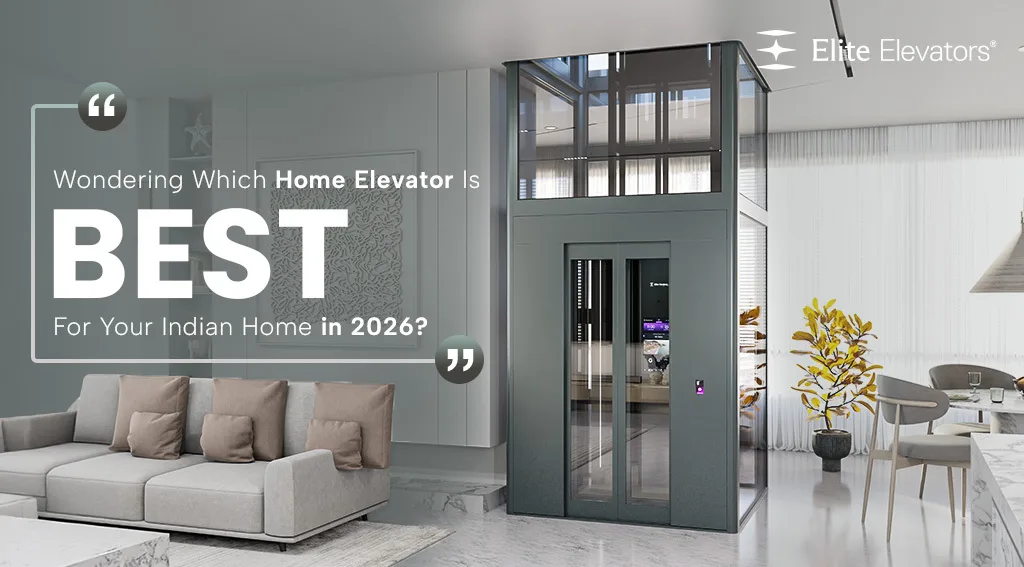
Table of Contents
- Why Consider a Home Elevator?
- What to Look for in a Home Elevator?
- The Pros and Cons of Home Elevator Types: Making the Best Choice for You
- Comparing the Top Elevator Types at a Glance
- Buyer’s Checklist: Tips Before You Choose Home Elevators
- Final Thoughts
Why Consider a Home Elevator?
Before exploring specific elevator models, it’s crucial to understand why adding a residential elevator is becoming a thoughtful investment:
1. Enhanced Accessibility for All Ages
A home elevator ensures easy movement between floors — especially helpful for seniors, children, and residents with mobility challenges. It makes everyday activities like carrying groceries or luggage effortless.
2. Space Optimization
Modern elevators designed for homes are pit-less and machine-room-less (MRL) — meaning they don’t require large structural work or extensive construction. These designs fit smoothly into existing homes with minimal disruption.
3. Boosts Property Value
Installing a home elevator is an attractive selling point that can enhance a property’s market value — appealing to buyers looking for comfort and accessibility features.
4. Safety and Convenience
Contemporary residential elevators come equipped with advanced safety systems, emergency power backups, and intuitive controls — making them safe and reliable for daily use.
What to Look for in a Home Elevator?

When selecting the right elevator for your home, consider these key factors:
- Safety Standards: Ensure the elevator complies with international safety standards like EN 81 certification.
- Space Requirements: Measure available shaft or installation space and choose a model that fits without compromising room aesthetics.
- Ride Quality: Smooth acceleration, quiet operation, and minimal vibration are markers of premium ride comfort.
- Energy Efficiency: Models with modern drive systems reduce operating costs.
- Customization: Finish options and cabin styles help integrate the elevator’s design seamlessly into your home interiors.
The Pros and Cons of Home Elevator Types: Making the Best Choice for You
In 2026, residential elevators are no longer a “luxury add-on” — they’re a thoughtfully considered part of modern Indian homes, offering accessibility, comfort, and future-proof convenience. From traditional hydraulic lifts to cutting-edge vacuum systems, this guide breaks down the top 5 elevator technologies so you can choose what fits your home best.
1. Hydraulic Home Elevators – Smooth & Powerful
Hydraulic home elevators are one of the most traditional and widely used residential lift systems. They operate using a hydraulic pump that pushes fluid into a cylinder to raise the elevator car, making them dependable and cost-effective for low-rise homes.
Key Advantages
- Smooth Ride: Very gentle, vibration-free motion — ideal for seniors.
- Lower Noise: Almost silent in operation.
- Heavy Loads: Good for families needing to move wheelchairs, furniture, or luggage.
- Simple Mechanics: Proven, mature technology.
Drawbacks
- Requires some pit and overhead space.
- Periodic hydraulic fluid maintenance may be needed.
- Slightly slower than traction or gearless systems.
Best For
Homes with 2–4 storeys, villas, or residences where comfort and smooth ride quality matter most.
Pro Tip
For Indian homes that prioritize quiet use and smooth starts/stops over speed, hydraulic lifts remain among the most popular options.
2. Gearless Home Elevators – Efficient, Quiet & Future-Ready
Gearless home elevators are advanced residential lift systems that use electric traction technology without a gearbox, delivering superior ride comfort, energy efficiency, and long-term reliability. Most gearless systems today are designed as Machine-Room-Less (MRL) elevators, making them ideal for modern homes with space constraints.
How They Work
A gearless electric motor directly drives the traction sheave, which moves the elevator car using steel ropes or flat belts connected to a counterweight. Since there is no gearbox, the system operates with fewer mechanical losses and greater precision. The motor and control equipment are compactly installed within the elevator shaft.
Key Advantages
- High Energy Efficiency: Direct-drive motors consume less power and support regenerative drives.
- Ultra-Smooth & Quiet Ride: Minimal vibration and noise due to the absence of gears.
- Space-Saving Design: No separate machine room required in MRL configurations.
- Accurate Levelling: Ideal for elderly users and wheelchair access.
- Low Maintenance: Fewer moving parts mean reduced wear and longer lifespan.
- Suitable for Multiple Floors: Performs well in low- to mid-rise residential buildings.
Drawbacks
- Higher initial cost compared to hydraulic elevators.
- Requires precise installation and skilled technicians.
- Slightly higher dependency on quality electrical supply.
Best For
Modern villas, duplex homes, luxury apartments, and urban residences with 3–6 floors, where space efficiency, comfort, and premium performance are priorities.
In India’s evolving home elevator market, gearless home elevators are becoming the preferred choice for homeowners seeking a balance of technology, efficiency, and modern design.
3. Screw-Drive Home Elevators – Simple & Low-Impact
How They Work
Screw-drive elevators use a rotating screw and nut mechanism that directly lifts the elevator platform without ropes or hydraulics.
Key Advantages
- Low Civil Work: No pit or machine room often needed.
- Safe & Reliable: Very predictable movement.
- Good for Retrofitting: Ideal when shaft space is limited.
Drawbacks
- Slower speeds compared to other systems.
- Less common — parts and service might be less available locally.
Best For
Homes where minimal structural modification is desired without sacrificing lift functionality.
4. Pitless Home Elevators: No Deep Pit Required, Easy Retrofit
Pitless elevators are innovative systems that do not require a deep pit beneath the elevator’s base. These elevators use telescopic pistons or other alternative mechanisms to raise the cabin, which makes them ideal for retrofitting into existing buildings or homes where digging a pit is not feasible. They offer a convenient solution for homeowners who need an elevator but lack space for traditional systems.
Key Advantages
- No pit required: Perfect for retrofit applications, these lifts are ideal for buildings where digging a pit is impractical or not possible.
- Easy installation: As pitless systems require less civil work, they are easier to install and generally more affordable than traditional elevators.
- Smoother than stairlifts: While they are not as fast as other elevator types, they provide smoother vertical movement than alternatives like stairlifts.
Drawbacks
- Limited speed: Pitless elevators are typically slower than other systems, which can be a drawback in larger homes.
- Less weight capacity: These systems often have lower load-bearing capacities, making them unsuitable for homes that need to transport heavy objects frequently.
Ideal For
Ideal for homes that are undergoing renovations or for structures that have limited space for traditional elevator installations. Perfect for homes with up to 3 floors.
Price Range (Indicative)
₹14.5 lakh – ₹28 lakh, depending on design and installation complexity.
5. Vacuum (Pneumatic) Home Elevators – Stylish & Innovative
Vacuum elevators, also known as pneumatic lifts, are a modern, self-supporting elevator system that uses air pressure to move the cabin. Their futuristic design and minimal construction needs make them stand out.
How They Work
The elevator operates using controlled air pressure differences above and below the cabin. A vacuum pump removes air to lift the car, while gravity assists during descent.
Key Advantages
- Minimal Civil Work: No pit, machine room, or deep shaft required.
- Quick Installation: Often installed within days.
- Energy Efficient: Power is mainly used during ascent.
- Modern Aesthetic: Transparent tube design adds visual appeal.
- Low Maintenance: Fewer moving parts.
Drawbacks
- Limited load capacity compared to traction systems.
- Not ideal for very tall buildings or heavy usage.
- Premium pricing for design-centric homes.
Best For
Luxury homes, retrofitting existing houses, and homeowners seeking a stylish, compact lift solution.
In India, vacuum elevators are gaining popularity among premium homeowners looking for a modern, space-efficient alternative with minimal construction impact.
Comparing the Top Elevator Types at a Glance
| Elevator Type | Pricing | Space Needed | Maintenance | Best Use |
| Hydraulic | 26L – 55L | Medium (Requires pit) | Moderate | Villas, bungalows, and homes with 2–4 floors. |
| Gearless | 16.5L – 58L | Medium | Moderate | Multi-storey homes or those with higher usage (3+ floors). |
| Machine Room Less | 14L – 28L | Low (No machine room) | Low | Modern apartments, space-conscious homes (3–6 floors). |
| Pitless Home Elevators | 10L – 15L | Very Low (No pit needed) | Low | Retrofit homes, structures with no foundation pit. |
| Screw-Drive Home Elevators | 15L – 30L | Low (Minimal construction) | Very Low | Homes with limited structural modification needs. |
Buyer’s Checklist: Tips Before You Choose Home Elevators
- Structural Planning: A pre-installation survey ensures your chosen elevator fits shafts, headroom, electrical capacity, and pit requirements.
- Safety Features: Ensure emergency brakes, battery backup, intercoms, overload sensors, and compliance with safety standards.
- Maintenance & AMC: Ask about annual maintenance contracts — regular service maximises safety and longevity.
- Future Needs: Think long-term — e.g., wheelchair access or smart home integration.
Final Thoughts
In 2026, Indian homeowners have more high-quality, space-efficient, and technologically advanced home elevator options than ever before. Whether your priority is smooth comfort (Hydraulic), space-saving sophistication (Gearless/MRL), or budget accessibility solutions, there’s a type tailored to your needs.
Choosing the right home elevator type is a combination of space planning, comfort preferences, budget, and lifestyle requirements — and this guide should equip you to make an informed decision that fits your home perfectly.
Note: * Prices listed are starting rates, exclude applicable taxes, and may vary based on customization.



Nikhil Verma
Very informative content. I was confused between vacuum and hydraulic systems, but after reading this blog, I understand which are the best elevators for homes in India depending on space and budget. The buyer’s checklist section is especially practical for Indian homes.
Swati Kapoor
I’ve been researching the top home elevators in India for months, and this article finally simplified everything. The pricing insights and best-use recommendations make it easier for Indian homeowners to plan long-term.
Rakesh Gupta
Great content with practical Indian context. The pros and cons for each system help buyers make informed decisions. Definitely one of the top elevator guides I’ve come across.
Tanya Jain
I appreciate how this article highlights safety standards like EN 81 and certifications. When searching for the best home elevator, safety is my top concern. Very insightful guide for Indian families.
Mohit Sharma
Loved the structured format. The clear explanation of load capacity and space requirements makes this one of the most useful top elevator comparison posts.
Preeti Verma
I found the section on future-proofing and wheelchair access very relevant. This is a must-read for anyone searching for the best home elevators in India.