

 Add Elite as Preferred
 Home elevators empower wheelchair users with safe, independent access across every floor. From barrier-free entry to advanced safety features, Elite Elevators’ E200, E300, and X300 series make modern multi-level homes more accessible, comfortable, and mobile.
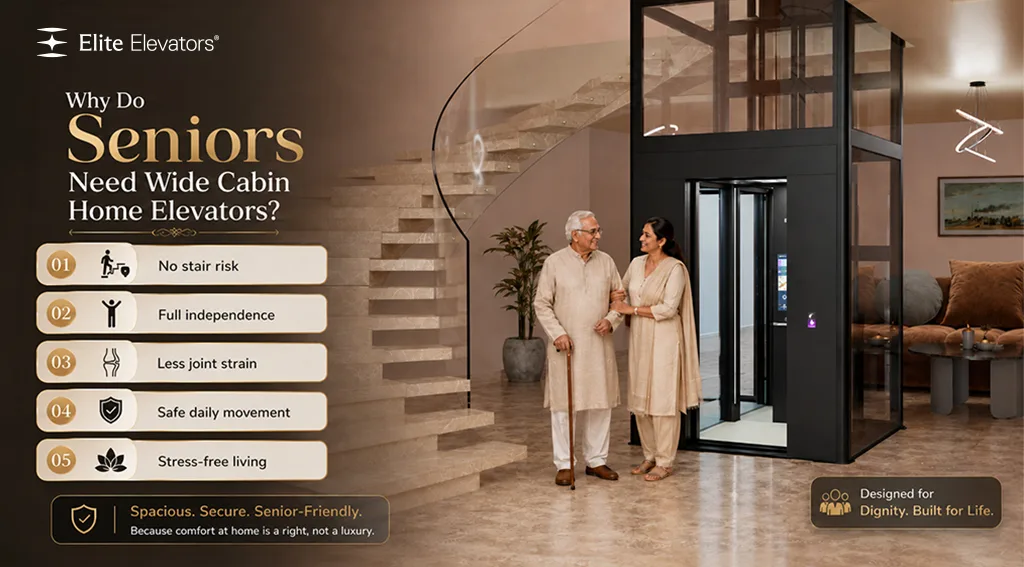
Introduction: Addressing Mobility Barriers in Multi-Level Residences
Multi-level homes are designed for comfort and space, but for wheelchair users, they often create serious accessibility challenges. Staircases divide living areas, making it difficult or impossible to move freely between floors without assistance. This limitation affects independence, safety, and the overall quality of life.
Table of Contents
- Introduction: Addressing Mobility Barriers in Multi-Level Residences
- What Are the Key Benefits of Wheelchair-Accessible Home Elevators?
- Who Needs Home Elevators for Accessibility and Mobility Support?
- Why Are Staircases a Major Barrier for Wheelchair Users?
- Which Elite Elevators models support wheelchair accessibility?
- Where Can Wheelchair-Accessible Home Elevators Be Installed?
- How Much Do Wheelchair-Accessible Home Elevators Cost and What Affects Pricing?
- Frequently Asked Questions
- Conclusion: Accessibility as Essential Residential Infrastructure
Home elevators have emerged as a transformative solution, eliminating these barriers and enabling seamless movement within the home. More than just a convenience, they provide essential support for individuals with mobility limitations, seniors, and those recovering from injuries.
Elite Elevators offers a range of advanced smart home elevator solutions designed to improve accessibility. The E200 models can accommodate wheelchair users with custom configurations. The X300 series is engineered for effortless wheelchair accessibility with larger cabins, threshold-free entry, and intelligent controls.
This guide explores how home elevators improve daily living, who benefits most, where they can be installed, and how much they cost, helping homeowners make informed decisions about accessibility solutions.
What Are the Key Benefits of Wheelchair-Accessible Home Elevators?
Home elevators significantly improve the quality of life for wheelchair users by providing independence, safety, and convenience. One of the most important benefits is the ability to move freely between floors without relying on others. This independence allows users to maintain control over their daily routines and enhances their confidence.
Safety is another major advantage. Unlike staircases, which pose a high risk of falls and injuries, home elevators are equipped with advanced safety systems such as automatic rescue devices, emergency lowering functions, and door interlocks. These features ensure secure and reliable operation even during unexpected situations like power failures.
Home elevators also maximise the usability of a house. Instead of limiting living to one floor, users can access all areas, including bedrooms, kitchens, and recreational spaces. This creates a more comfortable and inclusive living environment.
Additionally, elevators reduce the physical and emotional burden on carers. By eliminating the need for manual assistance, they promote independence for users while improving the overall household dynamic.
With global populations aging and accessibility becoming a priority, home elevators are now considered an essential feature in residential design rather than a luxury.
Who Needs Home Elevators for Accessibility and Mobility Support?
Home elevators are not limited to a single group of users. They serve a wide range of individuals with varying needs. Wheelchair users are the primary beneficiaries, as elevators provide smooth, safe, and reliable movement between floors. Spacious cabins and easy entry ensure comfort and convenience.
Senior citizens also benefit significantly from home elevators. As mobility declines with age, navigating stairs becomes increasingly difficult and risky. Elevators allow seniors to continue living independently and safely in their homes, supporting the concept of aging in place.
Individuals recovering from surgeries or injuries often require temporary mobility assistance. Home elevators provide a safe way to move between floors without strain, aiding recovery and reducing the risk of further injury.
Forward-thinking homeowners are also investing in elevators as part of future-proofing their homes. By integrating accessibility features early, they ensure their homes remain functional and adaptable for years to come.
Why Are Staircases a Major Barrier for Wheelchair Users?
Staircases are one of the most significant obstacles in multi-level homes for wheelchair users. They require constant assistance, which limits independence and freedom of movement.
Manual transfers on stairs are not only inconvenient but also dangerous. They increase the risk of falls, injuries, and physical strain for both users and carers. This makes everyday activities more stressful and potentially hazardous.
Staircases also restrict access to large portions of the home. Without an elevator, entire floors may become unusable, reducing the functionality and value of the living space.
Beyond physical limitations, there is also a psychological impact. The inability to access certain areas of the home can lead to frustration, reduced confidence, and a sense of isolation. Addressing these challenges is essential for creating a safe and inclusive living environment.
Which Elite Elevators models support wheelchair accessibility?
Elite Elevators offers multiple home elevator models that support wheelchair users, each designed to meet different accessibility needs. The E200 hydraulic home elevator is a wheelchair-compatible option. It offers up to 400 kg capacity, customisable cabin sizes, and is designed to allow smooth, barrier-free access. These features make it suitable for wheelchair users when configured appropriately.
The E300 cogbelt home elevator also supports wheelchair accessibility. It provides customisable dimensions, smooth ride quality, and advanced safety features. Like the E200, it can accommodate wheelchair users depending on the design and layout.
The X300 series, including the X300 Mark II and Mark II Plus, is specifically engineered for wheelchair accessibility. These models feature spacious cabins ranging from 1200×1200 mm to 1500×1500 mm, threshold-free entry, and intelligent controls such as biometric access and touchscreen interfaces. The smooth leveling system ensures easy entry and exit without bumps or gaps.
Where Can Wheelchair-Accessible Home Elevators Be Installed?
One of the biggest advantages of modern home elevators is their installation flexibility. They can be installed in both new constructions and existing homes, making them accessible to a wide range of homeowners.
In new homes, elevators can be integrated into the design from the beginning, ensuring optimal placement and cost efficiency. In existing homes, they can be retrofitted with minimal structural modifications, thanks to compact designs and advanced engineering.
Common installation locations include stairwell voids, corners of rooms, or external glass shafts. These options allow homeowners to choose placements that best suit their space and design preferences.
Modern home elevators also eliminate the need for deep pits or machine rooms, reducing construction complexity and making installation faster and more convenient.
How Much Do Wheelchair-Accessible Home Elevators Cost and What Affects Pricing?
The cost of home elevators varies based on several factors, including technology, design, and customisation. For the X300 Mark II, prices typically start from ₹18.75 lakhs for a G+1 configuration, with costs increasing for additional floors and advanced features. The X300 Mark II Plus is priced higher due to its smart technology and premium capabilities.
Key factors influencing cost include the number of floors, cabin size, design finishes, and additional features such as smart controls and safety enhancements. Customisation for wheelchair accessibility can also impact pricing.
Despite the initial investment, home elevators provide excellent long-term value. They have a lifespan of 20 to 25 years, increase property value, and consume minimal energy. Maintenance costs are relatively low, ensuring reliable performance over time.
For many homeowners, the benefits of improved accessibility, safety, and independence far outweigh the initial cost, making home elevators a worthwhile investment.
Frequently Asked Questions
1. Are E200 and E300 suitable for wheelchair users?
Yes, both the E200 and E300 series can accommodate wheelchair users with proper cabin sizing and entry configurations. However, accessibility depends on customisation rather than standard design.
2. Which model is best for wheelchair accessibility?
The X300 series is the best choice, as it is specifically engineered for wheelchair users. It offers larger cabins, threshold-free entry, and user-friendly smart controls.
3. What is the cost of wheelchair-accessible elevators?
Prices for wheelchair-accessible home elevators start from ₹18.75 lakhs. The final cost varies based on floors, features, and customisation options.
4. Can elevators be installed in existing homes?
Yes, modern home elevators are designed for easy retrofitting with minimal structural changes. They can be installed in both new and existing homes.
5. What capacity is required for wheelchair use?
A capacity of 400–440 kg is ideal for accommodating a wheelchair, a user, and an attendant, ensuring safe and comfortable operation.
Conclusion: Accessibility as Essential Residential Infrastructure
For wheelchair users, accessibility is not a luxury but a necessity. Home elevators provide independence, improve safety, and ensure that every part of a home is accessible.
Elite Elevators offers a range of solutions, including the E200 and E300, which can support wheelchair users with the right configurations. However, the X300 series stands out as the most advanced option, delivering a truly seamless and barrier-free experience.
Investing in a home elevator is ultimately an investment in independence and long-term quality of life. As homes evolve to meet modern needs, accessibility solutions like these are becoming an essential part of future-ready living.
Note: * Prices listed are starting rates, exclude applicable taxes, and may vary based on customization.



Aarthi Kumar
This blog was very informative and gave a clear understanding of how home elevators for wheelchair users can transform daily life. I liked how the article explained the benefits of independence, safety, and convenience in multi-level homes. The details about wheelchair accessible home elevators and modern accessibility features were especially useful for families planning long-term mobility solutions. Great resource for homeowners looking to improve accessibility and comfort.
Hemalatha Raj
A well-written article that highlights the importance of wheelchair friendly home elevators in modern homes. The explanation about mobility challenges and how elevators help users access every floor safely was easy to understand. I also appreciated the information about safety systems and customization options. Anyone researching accessible home elevators will find this guide very helpful before making a decision.
Vijay Narayan
I found this article extremely helpful while researching accessibility options for a family member. The discussion about home elevators for wheelchair users clearly explained how elevators improve safety and freedom of movement. The information about installation flexibility and long-term value was also useful. A great guide for anyone considering mobility upgrades in a multi-level home.
Sudeep Ramesh
This is one of the most detailed articles I have read about wheelchair mobility home elevators. The content explains the challenges wheelchair users face and how elevators provide a practical solution. I especially liked the section covering safety features and accessibility-focused designs. A very informative blog that answers many common questions homeowners may have.
Charan Teja
I enjoyed reading this blog because it focuses on improving quality of life through accessibility. The information about wheelchair friendly home elevators and barrier-free movement was very useful. The article also explains the importance of safety and independence in a simple way. A great educational resource for families considering modern home mobility solutions.
Bharani Kumar
I was impressed by the depth of information provided in this article. The discussion about wheelchair mobility home elevators and their impact on daily living was both practical and easy to understand. The focus on safety, accessibility, and convenience makes this blog highly relevant for families exploring mobility-friendly home upgrades.
Rajasekar M
An excellent resource for anyone researching wheelchair accessible home elevators. The article highlights key considerations such as safety, accessibility, installation, and long-term value. The content is well-structured and provides practical information that homeowners can use when evaluating mobility solutions for their families.