

 Add Elite as Preferred


Home elevators are no longer considered a luxury reserved for expansive villas or ultra-modern mansions. Today, compact and efficient lift technologies have made it possible for homeowners—even those with limited space—to enjoy the convenience, safety, and comfort of having a private elevator. Among the many options available, Machine Room Less (MRL) home elevators are becoming the top choice for modern households.
If you’re planning to install a lift in your home, understanding what an MRL elevator is, how it works, and why it may be the best option for your property is essential. This guide breaks down everything homeowners need to know about Machine Room Less home elevators, including features, benefits, installation needs, and long-term considerations.
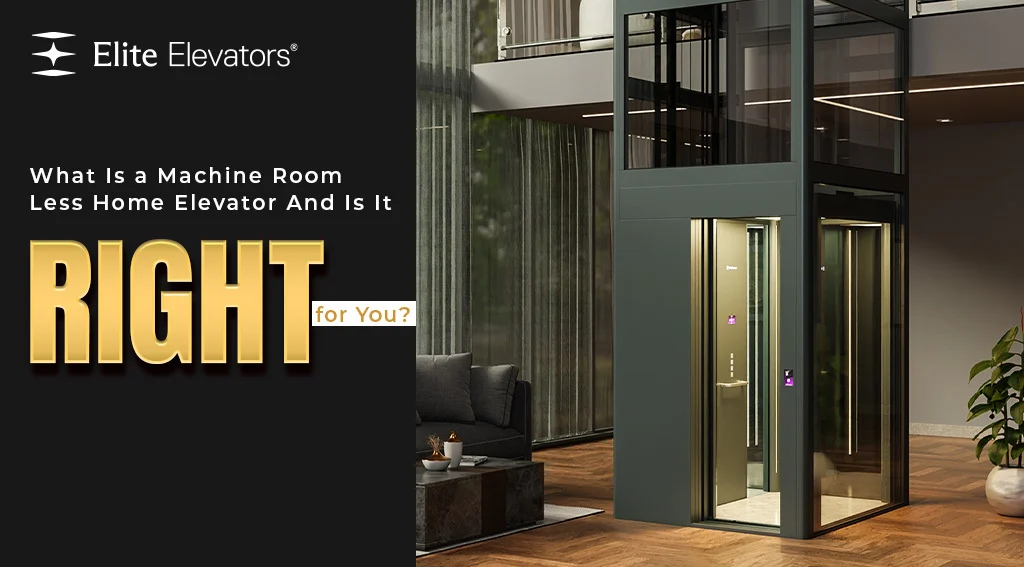
Table of Contents
- What Is a Machine Room Less (MRL) Home Elevator?
- How Does an MRL Home Elevator Work?
- Key Features of Machine Room Less Home Elevators
- Benefits of Installing an MRL Home Elevator
- Space and Structural Requirements
- MRL vs Hydraulic Home Elevators: Which Is Better?
- Maintenance Requirements of MRL Home Elevators
- Cost of MRL Home Elevators
- Who Should Choose an MRL Home Elevator?
- Conclusion: Is an MRL Home Elevator Right for You?
- FAQs on Machine Room Less (MRL) Home Elevators
- 1. How is an MRL elevator different from traditional elevators?
- 2. Is an MRL home elevator suitable for small homes?
- 3. Do MRL elevators require a lot of maintenance?
- 4. Are MRL elevators noisy?
- 5. Can MRL elevators be customized?
- 6. What technology do MRL elevators use?
- 7. How long does it take to install an MRL home elevator?
What Is a Machine Room Less (MRL) Home Elevator?
A Machine Room Less home elevator is a type of lift system that does not require a separate machine room to house the elevator’s motor and control equipment. Instead, the machinery is integrated directly into the shaft or placed compactly near the elevator structure.
This means:
- No dedicated machine room required
- Less construction work
- Smaller space needed
- Cleaner architectural design
MRL elevators have gained immense popularity among homeowners because they offer the perfect balance between performance, space efficiency, and aesthetics.
How Does an MRL Home Elevator Work?
MRL elevators typically use either traction technology or gearless motors housed within the shaft. Here’s how the system functions:
1. Compact Machinery Placement
All the essential components—motor, controller, brakes—are housed inside the hoist way or mounted on the top landing. This eliminates the need for a room above the shaft.
2. Smooth Lifting Mechanism
MRL elevators often use a traction system, which includes steel belts or ropes that move the cabin smoothly through the shaft.
3. Advanced Control Systems
Because the control panel is embedded within the shaft or landings, MRL lifts operate with high precision and minimal noise.
4. Efficient Power Consumption
MRL motors are engineered for minimal energy usage while delivering superior performance—an attractive feature for eco-conscious homeowners.
Key Features of Machine Room Less Home Elevators
MRL home elevators come with a combination of functional and aesthetic features designed to enhance the homeowner experience. Some of the most notable include:
1. Space-Saving Design
The absence of a machine room makes these elevators ideal for small homes, duplexes, villas, and retrofitted spaces.
2. Quiet and Smooth Operation
Advanced traction motors reduce noise and vibration, ensuring a peaceful ride inside your home.
3. Energy Efficiency
MRL lifts consume significantly less power than hydraulic elevators, making them cost-efficient in the long run.
4. Elegant, Customizable Interiors
Homeowners can choose designs, colors, lighting, flooring, and finishes to match the home’s style.
5. Safety and Reliability
Most MRL home elevators come equipped with advanced safety features such as:
- Automatic rescue device
- Overload protection
- Emergency braking system
- Power failure lowering
Benefits of Installing an MRL Home Elevator
1. Ideal for Small and Existing Homes
Since there’s no need for a separate machine room, homeowners can save space, making installation easier even in older buildings or compact floor plans.
2. Lower Construction and Installation Costs
With fewer structural requirements, MRL elevators often reduce civil work, helping homeowners save on pre-installation expenses.
3. Energy-Efficient Performance
MRL motors are lighter, use less electricity, and deliver better output than traditional hydraulic systems.
4. Modern Aesthetic Appeal
The clean, machine-room-free design aligns perfectly with contemporary home interiors.
5. Higher Safety Standards
The design ensures fewer moving parts and more reliable technology, resulting in a safer home mobility solution.
Space and Structural Requirements
Although MRL home elevators save substantial space, some basic structural requirements are still necessary:
1. Shaft Space
Most MRL lifts require a hoistway, though compact models may come with self-supported structures.
2. Pit Requirement
Depending on the brand, a small pit (6–12 inches) may be needed for safety buffers.
3. Headroom Space
Typically between 2500–3000 mm, depending on the cabin size and model.
4. Electrical Load
Standard single-phase or three-phase connections are typically sufficient.
Professional elevator suppliers usually provide exact drawings based on your home layout.
MRL vs Hydraulic Home Elevators: Which Is Better?
Many homeowners compare MRL and hydraulic elevators before deciding. Here’s a quick comparison:
| Feature | MRL Elevator | Hydraulic Elevator |
| Machine Room | Not required | Required |
| Energy Use | Low | Higher |
| Ride Smoothness | Very smooth | Smooth |
| Space Needed | Less | More |
| Eco-Friendly | Yes | Requires oil |
| Maintenance | Low | Higher |
In most modern home installations, MRL elevators are preferred due to their compactness, efficiency, and advanced technology.
Maintenance Requirements of MRL Home Elevators
Maintaining an MRL home elevator is simpler than many homeowners expect. Routine maintenance usually includes:
- Checking traction system and belts
- Inspecting control panels and electricals
- Lubricating moving parts (minimal for MRL)
- Verifying safety features
- Ensuring smooth ride and leveling
MRL elevators require less maintenance than hydraulic systems since they do not use oil or large pumps.
Cost of MRL Home Elevators
The price of an MRL home elevator depends on multiple factors such as:
- Cabin size
- Number of floors
- Features and customizations
- Brand and safety certifications
- Installation complexity
While MRL elevators may cost slightly more initially than hydraulic lifts, they offer major long-term savings on energy and maintenance.
Who Should Choose an MRL Home Elevator?
MRL elevators are best suited for:
- Homeowners with limited space
- Those looking for low-maintenance solutions
- Multi-storey homes with frequent usage
- Modern homes requiring sleek design
- Elderly-friendly or accessible living spaces
- Anyone seeking energy-efficient lift technology
If your home prioritizes convenience, reliability, and space optimization, MRL elevators are likely the ideal choice.
Conclusion: Is an MRL Home Elevator Right for You?
Machine Room Less home elevators have transformed home mobility by offering a perfect blend of space efficiency, elegant design, and advanced technology. They eliminate the need for a machine room, reduce installation work, operate quietly, and require minimal maintenance—making them a highly practical choice for homeowners.
If you are planning to upgrade your home, improve accessibility, or simply make daily movement effortless, an MRL home elevator is one of the smartest investments you can make.
FAQs on Machine Room Less (MRL) Home Elevators
1. How is an MRL elevator different from traditional elevators?
Traditional elevators require a dedicated machine room above or beside the shaft. MRL elevators eliminate that need by integrating the motor and controller into the shaft, saving space and reducing construction work.
2. Is an MRL home elevator suitable for small homes?
Yes. MRL elevators are specifically designed to fit compact spaces, making them ideal for small homes, independent houses, duplexes, and retrofit projects.
3. Do MRL elevators require a lot of maintenance?
No. MRL elevators require less maintenance than hydraulic systems because they use advanced traction or gearless motors with fewer mechanical components. Lift routine inspections are enough to ensure smooth operation.
4. Are MRL elevators noisy?
No. MRL elevators are known for quiet performance due to gearless or traction motors. They produce minimal vibration, ensuring a peaceful environment inside the home.
5. Can MRL elevators be customized?
Yes. Homeowners can personalize cabin interiors, lighting, control panels, flooring, doors, and finishes to match the home’s style—making the elevator both functional and aesthetic.
6. What technology do MRL elevators use?
Most MRL systems operate on traction or gearless motors, eliminating the need for oil-based mechanisms. This results in smoother rides, cleaner operation, and better reliability.
7. How long does it take to install an MRL home elevator?
Installation time varies between 2–6 weeks based on site readiness, number of floors, and cabin customization. Preparation work, if needed, may extend the timeline.
Note: * Prices listed are starting rates, exclude applicable taxes, and may vary based on customization.



Pankaj Gupta
A very practical guide. Understanding maintenance and safety features of machine room less home elevators was especially helpful.
Revathi Subramanian
Simple and clear explanation. This blog is perfect for homeowners planning to install space-saving home elevators.
Meera
This homeowner guide explains everything clearly. The benefits of MRL home elevators for independent houses are well covered.
Mohit Jain
Informative article. The advantages of machine room less home elevators for duplex and villa homes are well explained.
Lakshmi Narayan
Very useful homeowner guide. The focus on safety, design, and efficiency of MRL home elevators is reassuring.