

 Add Elite as Preferred


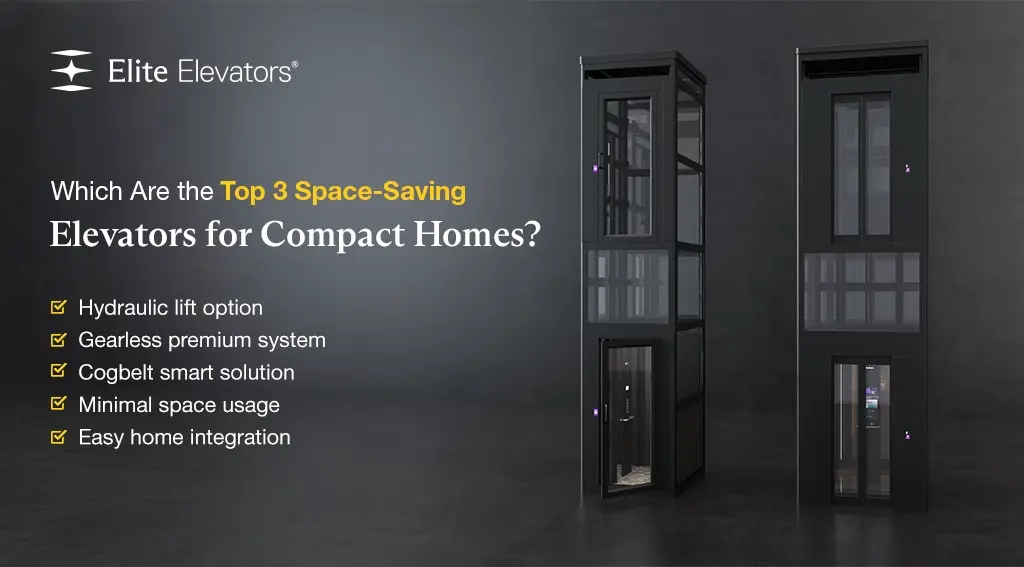
Space-saving small elevators are compact systems designed for residential homes with minimal space. With Elite Elevators, options like hydraulic, gearless, and cogbelt elevators offer efficient installation, smooth performance, and smart design, making them ideal for compact living.
Introduction: Small Homes Need Smarter Vertical Solutions
Space is becoming one of the biggest constraints in residential homes. Whether it’s a duplex, villa, or compact urban house, homeowners are now looking for solutions that maximise usability without increasing footprint.
Table of Contents
- Introduction: Small Homes Need Smarter Vertical Solutions
- What Makes an Elevator “Space-Saving” for Homes?
- Key Features Include:
- 1. Hydraulic Small Home Elevator (E200 / X200 Series)
- 2. Gearless Compact Elevator (X300 MK II Series)
- 3. Cogbelt Space-Saving Elevator (E300)
- Comparison: Top 3 Space-Saving Small Elevators
- How to Choose the Right Small Elevator for Your Home
- Small Home Elevator Cost in India (2026)
- Common Mistakes to Avoid
- Why Space-Saving Elevators Are the Future
- Conclusion: Which Small Elevator Should You Choose?
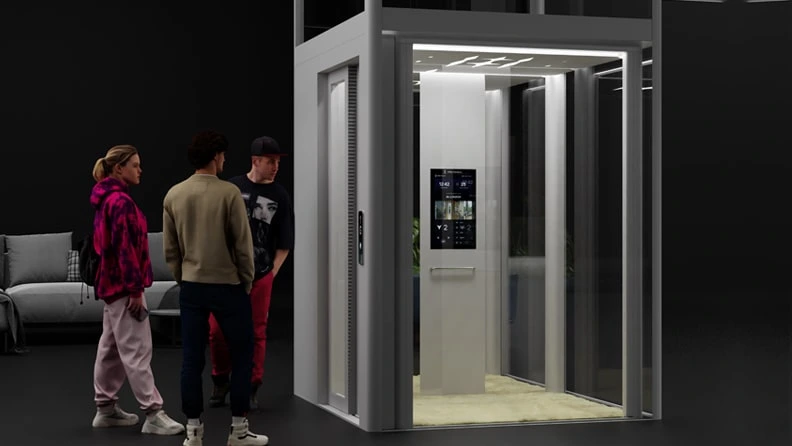
This is where space-saving small elevators come into focus. Unlike traditional bulky lifts, modern systems are designed to fit within compact layouts, require minimal structural changes, and deliver smooth daily performance. With solutions from Elite Elevators, small home elevators today are engineered with no machine room, minimal pit requirements, compact cabin designs, and advanced safety systems, making them ideal for Indian homes.
This guide explores the top 3 small elevators for the home in 2026, based entirely on Elite India models.
What Makes an Elevator “Space-Saving” for Homes?
Before selecting from the best small home elevators, it is important to understand what defines a space-saving system.
Key Features Include:
- Minimal pit requirement (as low as ~100–140 mm, depending on model)
- No machine room
- Compact shaft design
- Customisable cabin sizes
For example, Elite’s hydraulic systems, like the E200, require only a 120 mm pit depth and support up to 400 kg capacity, making them ideal for compact homes.
The goal is simple: maximum functionality within minimum space.
1. Hydraulic Small Home Elevator (E200 / X200 Series)
Hydraulic elevators remain one of the most popular choices for small house elevators.
Why It Stands Out
- Compact and space-efficient design
- Smooth, jerk-free movement
- Operates on single-phase power
- Load capacity up to 400 kg (3–4 persons)
Technical Highlights
- Speed: 0.15–0.30 m/s
- Pit requirement: ~100–120 mm
- Headroom: ~2300 mm
- Travel height: up to ~13 metres
Best Use Case
- Compact villas and duplex homes
- Families needing daily usability
- Homes with elderly users
The X200 series is also known for its custom-built design, ensuring it fits precisely within available space.
Why It Works for Small Homes
Hydraulic elevators are ideal when:
- Space is limited.
- Usage is moderate.
- Comfort is a priority.
2. Gearless Compact Elevator (X300 MK II Series)
For homeowners seeking performance in a compact design, gearless systems are the next level.
Why It Stands Out
- Faster speed (up to 1 m/s)
- Ultra-smooth and silent operation
- Smart diagnostics and remote monitoring
- Premium design with glass aesthetics
Key Features
- No deep pit requirement
- Gearless belt drive system
- Four performance modes (Comfort, Eco, Sports, Personalisation)
Best Use Case
- Compact to luxury homes of all types
- Multi-level houses with frequent usage
- Users looking for performance + aesthetics
Why It Works for Small Homes
Despite being advanced, the X300 series is designed to
- Fit into compact layouts
- Require minimal structural changes
- Deliver high-speed mobility
It combines space efficiency with premium performance, making it ideal for residential homes.
3. Cogbelt Space-Saving Elevator (E300)
The E300 offers a balanced solution between hydraulic comfort and gearless performance.
Why It Stands Out
- Compact footprint
- No machine room
- Energy-efficient operation
- Quiet and smooth travel
Key Features
- Single-phase power operation
- EN 81-41 certified
- Advanced safety systems with multiple parameters
Best Use Case
- Medium-sized homes
- Users seeking balance between cost and performance
- Homes requiring flexible installation
Why It Works for Small Homes
The E300 is ideal when:
- You want better performance than hydraulic
- But don’t need full gearless speed.
It offers a middle-ground solution for modern residential mobility.
Comparison: Top 3 Space-Saving Small Elevators
| Feature | Hydraulic (E200 / X200) | Gearless (X300 MK II) | Cogbelt (E300) |
| Space Requirement | Very Low | Low | Low |
| Speed | 0.15–0.30 m/s | Up to 1 m/s | Moderate |
| Capacity | Up to 400 kg | Up to 440 persons | Up to 400 kg |
| Pit Requirement | ~100–120 mm | 59 mm (no shaft) / 100 mm (with shaft) | 140 mm /pitless possible |
| Best For | Compact homes | Premium homes | Balanced usage |
How to Choose the Right Small Elevator for Your Home
Selecting the best small elevators for home depends on three main factors.
1. Space Availability
- Very limited space → Hydraulic
- Moderate space → Cogbelt
- Flexible space → Gearless
2. Usage Frequency
- Low usage → Hydraulic
- Medium usage → Cogbelt
- High usage → Gearless
3. Budget vs Performance
- Cost-focused → Hydraulic
- Balanced → Cogbelt
- Premium → Gearless
Choosing the right system ensures better performance and long-term reliability.
Small Home Elevator Cost in India (2026)
The small home elevator cost varies significantly based on technology.
Typical Price Range
- Hydraulic elevators → Lower to mid-range
- Cogbelt elevators → Mid-range
- Gearless elevators → Premium range
Overall, home elevator pricing in India can range widely depending on floors, customisation, and technology used.
Common Mistakes to Avoid
1. Choosing Only Based on Price
This often results in lower performance.
2. Ignoring Space Planning
Improper planning leads to installation issues.
3. Not Considering Future Needs
Elevators are long-term investments.
Avoiding these mistakes ensures better usability and durability.
Why Space-Saving Elevators Are the Future
Residential homes are evolving rapidly.
Key Trends:
- Smaller urban homes
- Multi-level layouts
- Accessibility-focused living
Elite’s X Series is specifically designed to address these needs with compact footprints and minimal structural impact, making them ideal for the best home lifts for modern homes.
Conclusion: Which Small Elevator Should You Choose?
Choosing the right small home elevators depends on your priorities.
- Best for compact homes → Hydraulic elevators (E200 / X200)
- Best for performance → Gearless elevators (X300 MK II)
- Best for balance → Cogbelt elevators (E300)
With solutions from Elite Elevators, homeowners can now install elevators that are:
- Space-efficient
- Safe and reliable
- Designed for residential living
The right elevator doesn’t just save space—it enhances how your home works every day.
FAQs
1. What are space-saving small elevators?
Space-saving small elevators are compact home elevator systems designed to fit within limited spaces. They require minimal structural changes, reduced pit depth, and no machine room, making them ideal for residential layouts.
2. Which is the best small elevator for home?
The best small elevator depends on your needs. Hydraulic elevators like the E200 are ideal for compact homes and everyday use, while gearless models like the X300 series are better suited for higher performance and frequent usage.
3. What is the cost of small home elevators?
The cost of small home elevators varies based on technology, number of floors, capacity, and customisation. Typically, pricing ranges from mid to premium levels depending on the features and system selected.
4. Can small elevators be installed in existing homes?
Yes, modern small elevators are designed for retrofit installation. They can be installed in existing homes with minimal structural modifications, making them a practical upgrade solution.
5. Do small elevators require a pit?
Most small home elevators require only a minimal pit depth, while some advanced models can operate with very low or near-pitless configurations, depending on the design and installation conditions.
Note: * Prices listed are starting rates, exclude applicable taxes, and may vary based on customization.


Senthil Kumar
Really informative article for anyone searching for a compact lift for home India solutions. Most blogs only talk about luxury elevators, but this one focused on real space challenges faced in modern homes. The comparison between hydraulic small home elevator systems and gearless compact elevator options made the selection process much easier to understand for families.
Bharath Ramesh
I found this blog extremely useful because it explained how small elevators in India are becoming more practical even for compact homes. The details about low pit depth, single-phase power, and smooth operation helped me understand why space saving elevators for home are now a smart investment rather than just a luxury addition for premium properties.
Gokul Krishna
Great article with detailed information about modern small elevators and how they suit compact residential layouts. The explanation about hydraulic small home elevator technology was easy to understand even for someone without technical knowledge. I also appreciated the realistic discussion around performance, comfort, and long-term usability for residential families.
Vinod Raj
Very helpful content for anyone researching small elevators in India for residential properties. I liked how the blog explained the difference between hydraulic, gearless, and cogbelt systems without making it overly technical. The section about space saving small elevators with minimal shaft requirements was especially informative and practical.
Mahesh Babu
Very informative and well-structured blog about elevator for small house designs. The section discussing low pit depth and no machine room requirements helped me understand how modern small elevators can fit into compact spaces easily. The article gave a balanced explanation of cost, performance, and technology options for homeowners.
Chandru Sekar
Very detailed and professional article about compact lift for home India solutions. The explanation about hydraulic, gearless, and cogbelt systems was balanced and easy to understand. I especially appreciated the section discussing future-ready living because space saving elevators for home are becoming increasingly important in modern residential architecture.
Saravanan M
Great article for homeowners searching for small elevators in India with compact installation requirements. The blog explained how modern elevator systems can operate efficiently without occupying too much space. I also liked the practical advice about avoiding mistakes while choosing a compact elevator for home installation.