

 Add Elite as Preferred


Hydraulic home elevators lift cabins using fluid-powered pistons, delivering stronger lifting power and stability. Pneumatic home elevators rely on vacuum air pressure and suit light usage. Elite Elevators recommends hydraulic elevators for durability and family usage.
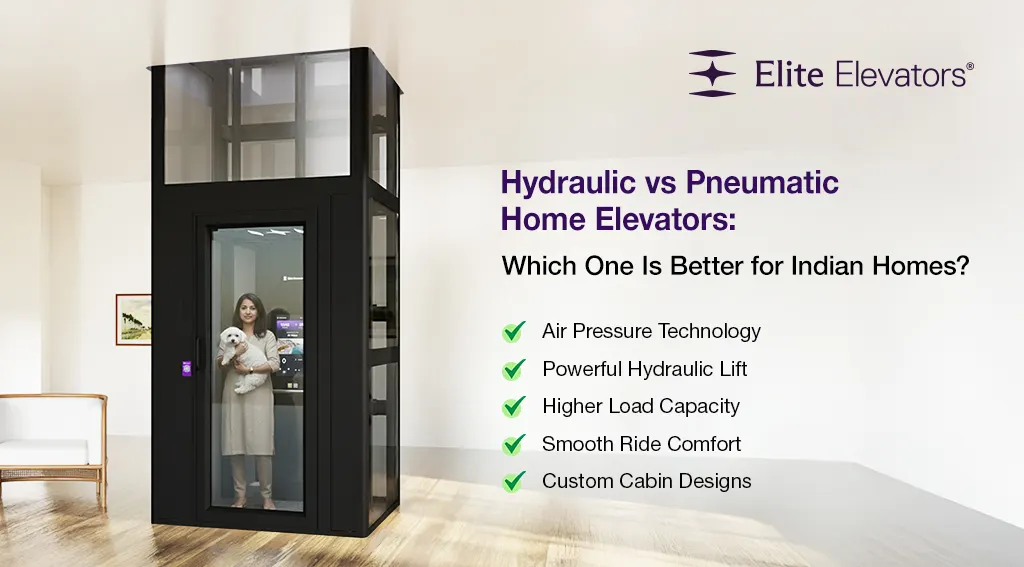
As Indian homes grow vertically, choosing the right elevator technology has become more important than ever. Today, homeowners often compare pneumatic elevators with hydraulic elevators while planning mobility solutions for duplexes, villas, and multi-storey residences. Understanding how these systems function, how they differ, and which one suits Indian conditions best is critical before investing in a home elevator.
Table of Contents
- How Do Pneumatic Elevators Work?
- How Do Hydraulic Home Elevators Work?
- Elite X200 Hydraulic Home Elevator: Compact Yet Powerful
- Load Capacity and Performance Comparison: Pneumatic vs Hydraulic Home Elevators
- Comparison Table: Hydraulic Vs Pneumatic Home Elevators
- Which Is Safer: Hydraulic or Pneumatic?
- How Does Maintenance Differ?
- Cost Comparison: Pneumatic Elevator Cost Vs Hydraulic Lift Price
- Where Do Gearless Home Elevators Fit In?
- Which Elevator Is Better for Indian Homes?
At Elite Elevators India, advanced European-engineered solutions such as the X200 Hydraulic Home Elevator, E200 Hydraulic Lifts, and gearless systems are designed specifically for Indian residential requirements. This blog explains how pneumatic home elevators and hydraulic systems work, how they compare, and which option delivers better long-term value.
How Do Pneumatic Elevators Work?
Pneumatic elevators, often referred to as a vacuum elevator for home, operate using air pressure. The cabin moves vertically inside a cylindrical tube by creating controlled air pressure differences above and below the lift cabin.
When air is removed from the top of the shaft, the pressure difference lifts the cabin upward. To descend, air is gradually reintroduced, allowing gravity-assisted downward movement.
Technical Characteristics of Pneumatic Elevators:
- Operate using air turbines
- Cylindrical self-supporting structure
- No cables or counterweights
- Typically designed for 2–3 passengers
- Limited load capacity compared to hydraulic elevators
- Lower structural integration with building framework
Because they rely on air pressure, pneumatic home elevators are generally suited for compact spaces and lower frequency usage. However, factors like pneumatic elevator cost, cabin size limitations, and suitability for Indian voltage conditions must be evaluated carefully.
How Do Hydraulic Home Elevators Work?
Hydraulic elevators operate using a piston and cylinder mechanism powered by hydraulic fluid pressure. An electric motor pumps hydraulic oil into the cylinder, pushing the piston upward and raising the cabin.
Elite Elevators India offers advanced hydraulic systems such as:
- X200 Hydraulic Home Elevator
- E200 Hydraulic Lifts
These systems are engineered for Indian homes and comply with European safety standards.
Technical Characteristics of Hydraulic Home Elevators:
- Indirect hydraulic chain system
- Smooth start and stop functionality
- Operates on single-phase power supply
- Load capacity up to 400 kg
- Stable vertical travel between 0.15 to 0.30 metres per second
- EN 81-41 certified safety parameters
Unlike pneumatic vacuum lifts for homes, hydraulic systems offer stronger lifting power, improved ride comfort, and higher weight handling capability.
Elite X200 Hydraulic Home Elevator: Compact Yet Powerful
The Elite X200 is one of the most preferred hydraulic elevators for Indian homes. Designed for compact spaces, it combines affordability with performance.
Key Technical Highlights of X200:
- Hydraulic drive mechanism
- Compact shaft requirement
- No excessive headroom needed
- Soft start and stop system
- GSM backup and auto-rescue device
- Overload alerts and error detection
- Customizable cabin interiors
For homeowners comparing pneumatic lifts for homes with hydraulic systems, the X200 delivers higher structural stability and smoother operation, especially in multi-floor villas and duplex homes.
Load Capacity and Performance Comparison: Pneumatic vs Hydraulic Home Elevators
When evaluating pneumatic vacuum elevators cost, it is important to compare actual performance specifications, especially load capacity and usage suitability.
Pneumatic Elevators
Generic pneumatic elevators, also known as pneumatic residential elevators or vacuum lifts for homes, typically support:
- Load capacity ranging between 170 kg to 240 kg depending on model
- Usually designed for 1 to 2 persons
- Cylindrical cabin structure with limited usable interior space
- Air turbine-driven lifting mechanism
- Gravity-assisted descent system
Because of their air pressure-based operation, pneumatic lifts for homes are generally suitable for light-duty, low-frequency usage environments. The compact cylindrical design restricts customization options and may not comfortably accommodate wheelchairs or multiple passengers. While pneumatic elevator cost may initially appear competitive, the limited weight handling and turbine dependency should be carefully evaluated for Indian residential usage patterns.
Elite Elevators Hydraulic Elevators Including X200
Elite Elevators’ hydraulic home elevators, including the X200 and E200 models, are engineered for stronger load handling and daily multi-user performance.
Technical specifications include:
- Load capacity up to 400 kg
- Suitable for 2 to 5 passengers depending on cabin configuration
- Rectangular and customizable cabin layouts
- Indirect hydraulic chain-driven piston system
- Controlled travel speed between 0.15 to 0.30 metres per second
- Operates on single-phase residential power supply
- EN 81-41 certified safety compliance
The higher load handling capability makes hydraulic elevators ideal for Indian homes where elevators are used multiple times daily by family members of all age groups. The piston-based lifting mechanism ensures stable vertical travel with minimal vibration and consistent ride comfort.
Unlike pneumatic vacuum lifts for homes, Elite Elevators hydraulic systems are designed to integrate structurally within the home, offering better long-term durability and superior cabin customization options.
Comparison Table: Hydraulic Vs Pneumatic Home Elevators
| Feature | Pneumatic Elevators | Hydraulic Elevators (Elite X200 / E200) |
| Working Mechanism | Air pressure system | Hydraulic piston system |
| Load Capacity | Lower | Up to 400 kg |
| Ride Stability | Moderate | High stability |
| Power Requirement | Turbine driven | Single-phase residential supply |
| Cabin Customization | Limited cylindrical design | Fully customizable cabins |
| Installation | Self-contained tube | Compact shaft-based system |
| Safety Compliance | Varies by manufacturer | EN 81-41 certified |
| Long-Term Durability | Moderate | High durability |
| Maintenance | Turbine dependent | Proven hydraulic reliability |
| Best Use Case | Light, occasional use | Regular family use |
Which Is Safer: Hydraulic or Pneumatic?
Safety is a primary concern when choosing between pneumatic residential elevators and hydraulic systems.
Hydraulic elevators from Elite Elevators India include:
- Automatic rescue device
- Door interlock systems
- Overload protection sensors
- Pressure stabilization systems
- Emergency stop functions
The X200 and E200 comply with EN safety standards, offering structured engineering compliance. While pneumatic vacuum lifts for homes include built-in braking systems, hydraulic systems provide stronger structural safety due to controlled piston mechanics and multi-layer safety design.
How Does Maintenance Differ?
Both systems require periodic servicing.
Hydraulic Elevators:
- Require hydraulic fluid inspection
- Annual safety parameter testing
- Stable mechanical components
- Long lifespan under proper maintenance
Pneumatic home elevators:
- Depend heavily on turbine functionality
- Require consistent air seal inspection
- Maintenance complexity may increase over time
Hydraulic systems such as the X200 are widely preferred for Indian environmental conditions due to reliability in varied voltage and temperature conditions.
Cost Comparison: Pneumatic Elevator Cost Vs Hydraulic Lift Price
When comparing pneumatic elevator cost with hydraulic lift price, it is essential to consider long-term value. Pneumatic vacuum elevators cost may appear competitive initially, but:
- Cabin size limitations
- Load restrictions
- Turbine replacement costs
- Limited customization
Hydraulic lift price varies depending on:
- Number of stops
- Cabin design
- Safety upgrades
- Interior customization
Elite Elevators hydraulic home elevators offer better long-term structural integration and resale value.
Where Do Gearless Home Elevators Fit In?
Besides hydraulic elevators, Elite Elevators India also offers advanced gearless home elevators such as the X300 series.
These systems use cog belt technology:
- No deep pit required
- No machine room
- Reduced vibration
- Energy-efficient motor system
- Enhanced safety parameters
While comparing hydraulic and pneumatic systems, homeowners should also evaluate gearless home elevators for modern villas requiring silent and premium performance.
Which Elevator Is Better for Indian Homes?
For Indian residential conditions, hydraulic home elevators such as the X200 are often better suited because:
- Higher load capacity
- Stable voltage compatibility
- Stronger structural integration
- Better customization options
- Certified European safety compliance
Pneumatic vacuum lifts for homes may suit compact spaces or occasional use environments, but for long-term durability and comfort, hydraulic systems offer more reliability.
Conclusion
When comparing hydraulic elevators and pneumatic elevators, the right choice depends on usage frequency, load requirements, and long-term expectations.
For Indian homes requiring:
- Higher passenger capacity
- Daily usage durability
- Certified safety standards
- Customizable cabin interiors
- Proven engineering reliability
Hydraulic home elevators such as the Elite X200 provide a stronger, more dependable solution. While pneumatic residential elevators offer compact installation and modern aesthetics, hydraulic systems remain the preferred choice for structural stability and consistent performance. Choosing the right elevator is not just about installation. It is about long-term comfort, safety, and value. Elite Elevators India continues to offer engineered mobility solutions designed specifically for modern Indian homes
FAQ
1. Are pneumatic elevators suitable for Indian homes?
Yes, pneumatic elevators suit compact, low-frequency residential use, but hydraulic systems like Elite X200 provide better durability and load stability for daily Indian usage.
2. What is the average hydraulic elevator price in India?
The hydraulic elevator price varies based on cabin design, number of stops, safety upgrades, and customization. Elite Elevators offers tailored pricing after a technical site evaluation.
3. Which is safer: a hydraulic or a pneumatic home elevator?
Hydraulic elevators with EN-certified safety systems, overload sensors, and auto-rescue devices generally provide stronger structural reliability compared to pneumatic vacuum lifts.
4. Do hydraulic elevators require more maintenance than pneumatic elevators?
Both systems require periodic servicing, but hydraulic elevators are mechanically durable and better suited for consistent long-term residential use in Indian conditions.
5. Is a vacuum elevator for the home better than a hydraulic elevator?
Vacuum elevators suit compact spaces, but hydraulic home elevators offer higher load capacity, smoother ride quality, and stronger structural performance for daily use.
Note: * Prices listed are starting rates, exclude applicable taxes, and may vary based on customization.


Megha Sharma
This was a very helpful explanation of hydraulic vs pneumatic home elevators. I always thought pneumatic home elevators were the most advanced option, but now I understand how a hydraulic home elevator offers better stability and capacity for daily family use. The comparison really made it easier to understand which technology works best for residential homes.
Saurabh Mishra
Great article! The way you explained pneumatic elevators and hydraulic systems in simple terms made it easy to understand how they actually work. Many people searching for the best home elevator will definitely find this comparison useful before deciding between a pneumatic elevator and a hydraulic home elevator.
Vikas Reddy
Thanks for sharing such a detailed guide on hydraulic vs pneumatic home elevators. Many homeowners are confused about these technologies, and this article explains the working mechanism in a very clear way. The comparison table between pneumatic elevators and hydraulic lifts was particularly useful.
Lalit Mehta
Excellent breakdown of hydraulic vs pneumatic home elevators. I was curious about how a pneumatic elevator actually works, and this article explained it perfectly. It also highlights why many homeowners prefer a hydraulic home elevator for better durability and consistent performance.
Shalini Verma
This article provides a great comparison of pneumatic elevators and hydraulic elevators. Many people only focus on design, but this blog explains the engineering behind both technologies. Understanding hydraulic vs pneumatic home elevators helps homeowners make smarter decisions.
Kiran
I appreciate the clear explanation of pneumatic home elevator technology in this blog. The way you compared it with a hydraulic home elevator makes it easy to understand which system works better for everyday use. Very helpful for anyone researching the best home elevator.