

 Add Elite as Preferred
 The lift inspection process in India requires certified installation, annual elevator safety inspection, and a valid lift compliance certificate. Elite Elevators ensures every lift stays inspection-ready year-round with proactive AMC and real-time fault monitoring.
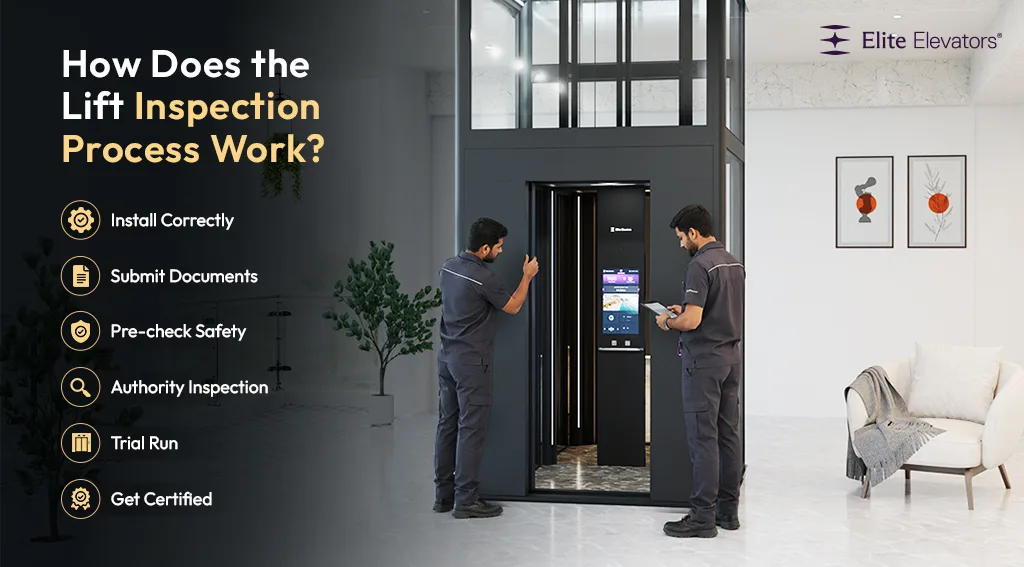
Most lift owners in India know inspections are required. What they are less clear on is what actually happens during one, who performs it, what documents are needed, and what the consequences are if something fails. This guide answers all of that clearly, practically, and in a format any homeowner or building manager can use.
Table of Contents
- Why the Lift Inspection Process in India Exists
- Who Performs Elevator Safety Inspections in India?
- The Lift Inspection Process in India Step by Step
- What Happens If a Lift Fails Inspection?
- Consequences of Operating Without a Certificate
- Elevator Maintenance Checklist — Between Inspections
- How Elite Elevators Keeps Your Lift Inspection-Ready
- Frequently Asked Questions
Why the Lift Inspection Process in India Exists
A lift operates under mechanical and electrical load dozens of times every day. Without periodic professional assessment, issues develop gradually worn brakes, misaligned doors, and degraded safety systems, and stay invisible until something actually fails.
The lift safety regulations India has established are not administrative formalities. They exist because home lifts without regular inspection genuinely become less safe over time, regardless of how well they were originally installed.
There is also a legal dimension that many building owners underestimate. Operating a lift without a valid inspection certificate is illegal across all Indian states. In the event of an accident involving an uncertified lift, full liability falls on the building owner, not the installer, not the manufacturer.
Who Performs Elevator Safety Inspections in India?
The authority conducting the elevator safety inspection varies by state. Most states use either a state lift inspector or an electrical inspector, both government-authorized officials with the power to approve or reject certification.
States with dedicated Lift Acts, including Maharashtra, Karnataka, Tamil Nadu, Telangana, and Andhra Pradesh, specify inspection requirements in detail. States without a dedicated Lift Act follow the National Building Code as the applicable standard.
Working with a lift manufacturer who understands local compliance requirements is important for this reason. The process and paperwork vary, and a knowledgeable installer makes the difference between a smooth first inspection and a frustrating delay.
The Lift Inspection Process in India Step by Step
Step 1: Certified Installation
Everything starts here. A lift installed with the wrong shaft dimensions, non-compliant safety components, or substandard wiring will create problems at every subsequent inspection. The lift inspection process in India is far smoother when the installation is correct from the start, by a certified company that understands both national and state-level requirements.
Step 2: Documentation Submission
Once the lift is installed, the building owner applies to the local lift authority for an inspection appointment. The application must include:
- Technical drawings of the installation and shaft
- Equipment specifications including load and speed ratings
- Electrical wiring diagrams
- Manufacturer safety compliance certificates
- Details of the installing company
Incomplete documentation is the most common reason first inspections are delayed. Having everything ready before applying saves weeks.
Step 3: Pre-Inspection Safety Check
Before the official visit, a qualified technician should conduct an internal check of the lift. This step is frequently skipped, and that is exactly why many lifts fail their first official inspection.
Key items to check:
- Door operation — smooth, quiet, aligned at every landing
- Emergency alarm — audible from inside the cabin
- Emergency lighting — active and working
- Brake function — correct engagement under load
- Floor levelling — cabin flush with every landing
- Pit condition — clean, dry, no obstructions
- GSM communication — emergency call system active
Completing this honestly before the official visit and fixing anything that fails significantly increases the chance of passing first time.
Step 4: Physical Inspection by the Authority
The official elevator safety inspection is a hands-on, site-based assessment, not a paperwork review. The inspector examines the shaft and pit, the drive system and brakes, the cabin interior, all landing and cabin doors, emergency systems, and the electrical installation. Every element is checked physically and functionally, not just visually.
Step 5: Trial Run and Load Testing
The inspector conducts a live test of the lift under load. They observe ride smoothness, floor leveling accuracy at every stop, door operation under real conditions, speed compliance, and emergency brake engagement. Any issue found during this test- vibration, leveling inaccuracy, noise, or inconsistent door behaviour results in a deficiency notice. The lift cannot be certified until every deficiency is corrected and the trial is repeated.
Step 6: Issuance of the Lift Compliance Certificate
If the lift passes all stages, the Lift Authority issues the lift compliance certificate India the legal document authorising operation. This certificate must be displayed visibly at the lift entrance at all times and renewed before expiry, which is annually in most states.
The building owner is responsible for tracking the renewal date and initiating re-inspection before the certificate lapses. The authority does not send automatic reminders in most states.
What Happens If a Lift Fails Inspection?
The inspector issues a written list of deficiencies. The lift cannot legally operate until every item is resolved and a re-inspection confirms compliance.
Common reasons lifts fail:
- Safety systems not functioning — ARD, alarm, or emergency lighting
- Electrical non-compliance — improper earthing or overrated wiring
- Door faults — misalignment or interlock failure
- Levelling inaccuracy beyond acceptable tolerance
Addressing these quickly requires the original installer or a certified maintenance company.
Consequences of Operating Without a Certificate
This point is absent from most guides but is essential for every building owner to understand. Operating a lift without a valid lift compliance certificate in India can result in legal action by the Lift Authority, fines under the applicable state Lift Act, forced shutdown until certification is obtained, and full personal liability for any accident during uncertified operation.
The financial and legal cost of non-compliance is significantly greater than the cost of maintaining the certificate every year.
Elevator Maintenance Checklist — Between Inspections
Annual government inspection is the legal minimum — not a substitute for ongoing maintenance. A regular elevator maintenance checklist keeps the lift performing all year correctly and eliminates surprises on inspection day.
| Activity | Frequency |
| Door alignment and sensor test | Monthly |
| Emergency alarm and communication | Monthly |
| Cabin and emergency lighting | Monthly |
| Brake and speed governor check | Quarterly |
| Electrical connections and earthing | Quarterly |
| Pit cleaning | Quarterly |
| Full load test and levelling check | Annually |
| Complete safety system review | Annually |
Keeping a written service log recording date, technician, and findings provides documentation for inspections and builds a reliable maintenance history.
How Elite Elevators Keeps Your Lift Inspection-Ready
Every Elite Elevators installation is commissioned with a full pre-handover safety test covering every item above so the lift enters service in inspection-ready condition from day one. The AMC includes scheduled visits aligned with monthly and quarterly maintenance requirements throughout the year. Smart models with ENS real-time fault monitoring flag issues between visits so problems are resolved proactively rather than discovered by an inspector.
When inspection day arrives, Elite Elevators customers have a maintained lift, complete original documentation, and a certified service team available to support the process. Getting the lift compliance certificate in India renewed is a straightforward annual confirmation, not a scramble.
Frequently Asked Questions
1. Is lift inspection mandatory for home elevators in India?
Yes. The lift inspection process in India applies to home elevators as well as commercial lifts. Every lift must pass a pre-use inspection and periodic renewals to be legally operated.
2. How often must a lift be inspected in India?
Most states require annual inspections. The compliance certificate specifies the expiry date, and renewal is the building owner’s responsibility.
3. What documents are needed for the lift compliance certificate?
Technical drawings, equipment specifications, electrical wiring diagrams, manufacturer safety certificates, and installing company details are typically required.
4. What is included in a proper elevator maintenance checklist?
Door alignment, emergency alarm, lighting, brake function, electrical connections, and floor leveling are checked monthly and quarterly. A full safety review annually with the government inspection.
5. What happens if a lift fails inspection?
A deficiency notice is issued, and the lift cannot legally operate until all items are resolved and re-inspection confirms compliance.
6. What are the consequences of no lift compliance certificate?
Legal action, fines, forced shutdown, and full personal liability for any incident during uncertified operation.
Note: * Prices listed are starting rates, exclude applicable taxes, and may vary based on customization.



Shalini Kapoor
This is a very helpful guide for understanding the lift inspection process in India. I especially liked the step-by-step explanation of documentation, pre-inspection checks, physical inspection, and load testing. The lift inspection checklist India section is useful for homeowners and building managers who want to avoid unexpected compliance issues and keep their elevators safe throughout the year.
Abhishek Gupta
This blog was genuinely informative for anyone responsible for a residential or commercial lift. I liked that it explains the difference between annual inspection and regular maintenance. The lift maintenance checklist gives a clear idea of what should be monitored between inspections. Knowing about documentation, safety testing, and certificate renewal can help owners keep their lift compliant and ready for inspection.
Ritu Sharma
A very informative guide for anyone planning to install or maintain a lift at home. The explanation of lift safety inspection India requirements helped me understand that inspection is not simply a paperwork exercise. Physical checks and live testing are equally important. The elevator safety checklist and maintenance recommendations make this article useful even after the initial installation is completed.
Karan Verma
This article explains elevator safety in a way that is easy for an ordinary homeowner to understand. I particularly liked the step-by-step description of what happens before and during an official inspection. The lift safety checklist covering alarms, emergency lighting, brakes, doors, and levelling is practical. It also makes sense to maintain a written service log for future inspections and compliance records.