

 Add Elite as Preferred


Choosing the right elevator for your building depends on space, usage, capacity, and safety needs. With Elite Elevators, you get advanced solutions designed for efficiency, reliability, and long-term performance, enhancing accessibility and property value.
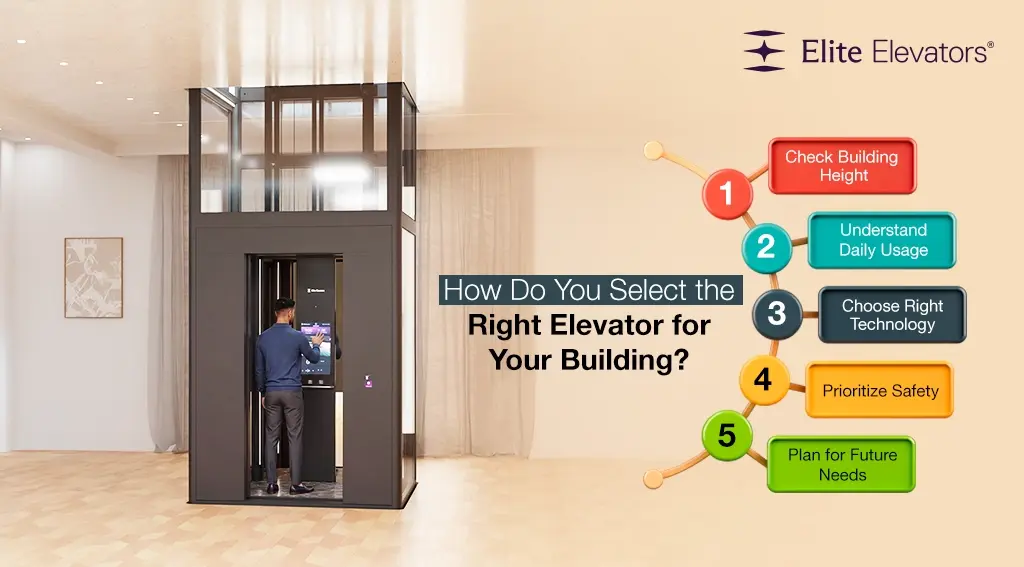
Introduction: Why Choosing the Right Elevator Is a Critical Decision
Selecting the right elevator for your building is one of the most important infrastructure decisions you will make. It is not just about vertical transportation; it directly affects safety, convenience, elevator energy efficiency, and long-term operational costs.
Table of Contents
- Introduction: Why Choosing the Right Elevator Is a Critical Decision
- What Does “Right Elevator for Your Building” Really Mean?
- 1. Technical Requirements
- 2. Usage Needs
- 3. Compliance and Safety
- What Are the Types of Elevators You Can Choose From?
- Hydraulic Elevators: Reliable for Low-Rise Buildings
- Why Choose Hydraulic Elevators?
- Gearless Elevators: Performance and Efficiency
- Cogbelt Elevators: Balanced Performance
- Why Consider Cogbelt Elevators?
- How Do You Choose the Right Elevator Based on Usage?
- How Important Is Capacity in Elevator Selection?
- Recommended Capacity Guide:
- Where Can You Install an Elevator in Your Building?
- When Should You Plan Elevator Installation?
- Why Safety Should Never Be Compromised
- What Are the Common Mistakes to Avoid?
- How Does Technology Impact Elevator Selection?
- Final Thoughts: Making the Right Choice
- Frequently Asked Questions (FAQs)
Many property owners focus only on the elevator installation price, but in reality, most issues arise from poor planning during the elevator’s selection process, not the elevator itself.
With modern solutions from Elite Elevators, building owners now have access to advanced systems such as hydraulic, gearless, and cogbelt elevators, each designed for specific usage needs.
So, how do you make the right choice? This guide breaks down everything you need to know.
What Does “Right Elevator for Your Building” Really Mean?
The right elevator is not the most expensive or the most advanced; it is the one that aligns perfectly with your building requirements.
1. Technical Requirements
- Number of floors and travel height
- Available installation space
- Structural load capacity
- Power supply availability
2. Usage Needs
- Daily passenger traffic
- Peak usage periods
- Accessibility requirements (elderly or wheelchair users)
3. Compliance and Safety
- European safety certifications
- Emergency systems and backup features
A properly selected elevator improves efficiency, reduces breakdowns, and enhances overall user experience.
What Are the Types of Elevators You Can Choose From?
Understanding the types of elevators is the first step in the decision-making process.
Hydraulic Elevators: Reliable for Low-Rise Buildings
Hydraulic systems are ideal for buildings up to G+3 floors.
Elite Models Include:
- X200
- X200 Plus
- E200
Why Choose Hydraulic Elevators?
- Smooth and comfortable ride
- Stable performance under load
- Operates on a residential power supply
- Suitable for homes with elderly users
These systems are best when comfort and reliability are more important than speed.
Gearless Elevators: Performance and Efficiency
Gearless elevators represent advanced elevator technology.
Elite Models Include:
Key Benefits:
- Faster travel speeds (up to ~1.0 m/s)
- Energy-efficient operation
- Ultra-quiet performance
- Premium ride quality
These elevators are ideal for high-usage buildings and premium homes.
Cogbelt Elevators: Balanced Performance
Cogbelt systems offer a balance between performance and cost.
Elite Model:
Why Consider Cogbelt Elevators?
- Moderate speed and performance
- Space-efficient design
- Cost-effective solution
This is a suitable option for mid-sized homes with moderate usage.
How Do You Choose the Right Elevator Based on Usage?
The success of elevator installation depends heavily on usage patterns.
Low Usage (20–50 trips/day)
- Best choice: Hydraulic elevators
- Reason: Cost-effective and reliable
Moderate Usage (50–150 trips/day)
- Best choice: Cogbelt elevators
- Reason: Balanced performance
High Usage (150+ trips/day)
- Best choice: Gearless elevators
- Reason: Faster, durable, and efficient
Choosing the wrong system can result in higher maintenance and reduced performance.
How Important Is Capacity in Elevator Selection?
Capacity plays a critical role in choosing an elevator.
Recommended Capacity Guide:
- 400 kg → Small homes
- 440 kg → Families and accessibility needs
- Higher capacities → Multi-user spaces
Elevators operating near maximum capacity may frequently experience increased wear and maintenance requirements.
Where Can You Install an Elevator in Your Building?
Modern systems are designed for flexible installation.
Common Locations:
- Staircase areas
- Corner spaces
- External shafts
- Retrofitted areas
Elite Installation Advantages:
- No machine room required
- Minimal pit requirement
- No major structural changes
This flexibility allows installation even in existing buildings.
When Should You Plan Elevator Installation?
Timing plays a key role in cost and efficiency.
During New Construction
- Lowest cost
- Best integration
During Renovation
- Moderate adjustments required
After Construction (Retrofit)
- Higher cost
- More complex installation
Planning early ensures better results and cost savings.
Why Safety Should Never Be Compromised
Safety is the most critical factor in elevator selection.
Essential Safety Features:
- Automatic Rescue Device (ARD)
- Emergency alarm system
- Door interlock safety
- Overload protection
Required Certifications:
- EN 81-20
- EN 81-41
- EN 81-50
Elite systems are designed to meet these European standards, ensuring reliable operation.
What Are the Common Mistakes to Avoid?
1. Choosing Based Only on Price
Lower-cost systems may lead to:
- Higher maintenance costs
- Reduced performance
2. Ignoring Space Requirements
This can cause:
- Installation delays
- Design limitations
3. Not Planning for the Future
Elevators last for decades, so consider:
- Future accessibility needs
- Increased usage
Avoiding these mistakes ensures better long-term performance.
How Does Technology Impact Elevator Selection?
Modern elevators are no longer just mechanical systems.
Advanced Features Include:
- Smart control systems
- Precision leveling
- Energy-efficient operation
Elite models such as X300 MK II Plus and X200 Plus integrate these features to enhance performance and user experience.
Final Thoughts: Making the Right Choice
Selecting the right elevator for your building requires balancing:
- Performance
- Safety
- Cost
- Future needs
With options such as:
- Hydraulic elevators for comfort
- Gearless elevators for performance
- Cogbelt elevators for balanced usage
Elite Elevators provides solutions designed to meet different requirements.
A well-selected elevator enhances:
- Daily convenience
- Accessibility
- Property value
Frequently Asked Questions (FAQs)
1. How do I choose the right elevator for my building?
Choosing the right elevator depends on evaluating key factors such as available space, daily usage, required capacity, safety features, and the type of technology used. A well-planned selection ensures long-term performance, safety, and convenience.
2. What are the types of elevators available?
The most common types of elevators used in residential buildings include hydraulic elevators, gearless elevators, and cog-belt elevators. Each type is designed to meet different performance, speed, and usage requirements.
3. What capacity is ideal for homes?
A capacity of 400–440 kg is generally ideal for residential applications. This range comfortably accommodates multiple users and supports everyday usage, including accessibility needs.
4. How long does installation take?
Elevator installation is typically completed within 2–3 weeks, depending on site conditions, structural readiness, and project requirements.
5. Can elevators be installed in existing buildings?
Yes, modern elevators are designed for retrofit installations and can be installed in existing buildings with minimal structural modifications, making them suitable for upgrades.
6. Are modern elevators safe?
Yes, modern elevators are equipped with advanced safety systems and comply with European safety standards such as EN 81-41, EN 81-20, and EN 81-50, ensuring reliable and secure operation.
7. What affects elevator cost?
Elevator cost is influenced by several factors, including the type of technology used, number of floors, cabin size, capacity, and level of customisation required.
Note: * Prices listed are starting rates, exclude applicable taxes, and may vary based on customization.


Jegan Mohan
Excellent blog with clear explanations and real-world insights. I was searching for the best elevator for home projects and found the comparison of different elevator technologies very helpful. The section on safety certifications and future planning adds great value. This is definitely a comprehensive building elevator guide for property owners.
Arun Prasad
Very insightful read. Most blogs talk only about elevator features, but this article explains how to select the right elevator for building needs based on traffic, space, and safety. The installation planning section was particularly useful. These elevator installation tips can help avoid costly mistakes in the future.
Naren Kumar
This guide does a great job explaining the differences between hydraulic, gearless, and cogbelt elevator for residential buildings. I found the capacity recommendations and usage-based suggestions very practical. The content is easy to understand even for first-time buyers. A valuable resource for anyone researching elevator solutions.
Shiva Teja
One of the best articles I have come across on elevator planning. The focus on elevator safety standards for buildings and certified systems shows how important safety is in the selection process. The guide covers everything from installation space to future accessibility needs. Very helpful and professionally written.
Dheeraj Varma
The information provided here is detailed without being overwhelming. I liked the explanation of how capacity affects long-term performance and maintenance. The elevator capacity guide section gave me a better understanding of what size elevator would suit different requirements. Highly informative and easy to follow.
Mohan Raj
A well-researched and easy-to-read article. The comparison between different elevator technologies helped me understand which option fits various building types. If someone is searching for the best elevator for buildings, this guide provides a clear roadmap. The focus on efficiency and safety is especially valuable.
Sasi Kumar
Great content with a balanced explanation of technology, performance, and safety. The article makes it easier to identify the right elevator for building requirements without getting confused by technical terms. The usage-based recommendations are particularly helpful. A useful building elevator guide for anyone considering an elevator.