

 Add Elite as Preferred
 Struggling with elevator issues at home? This guide on residential elevator troubleshooting by Elite Elevators India helps you identify common problems, understand error codes, and fix minor issues—ensuring smooth, safe, and reliable performance every day.
You press the elevator button, and nothing happens. Or worse, it moves unevenly, makes noise, or suddenly stops midway. Situations like these are more common than you think, especially in residential settings where elevators are used daily for comfort and accessibility.
Table of Contents
- About Elite Elevators India
- Understanding Residential Elevator Troubleshooting
- Step-by-Step Elevator Troubleshooting Guide
- Step 1: Check Power Supply
- Step 2: Review the Control Panel
- Step 3: Inspect Doors and Sensors
- Step 4: Restart the System
- Step 5: Monitor Performance
- Understanding Residential Elevator Error Codes
- When Should You Call a Professional?
- How Maintenance Reduces Elevator Problems
- Lifestyle Benefits of Proper Troubleshooting
- Why Choosing the Right Elevator Matters
- Conclusion
- FAQs
That’s where residential elevator troubleshooting becomes essential. Knowing how to identify and respond to issues can save you time, reduce stress, and prevent unnecessary repair costs.
This guide will walk you through practical lift troubleshooting steps, explain common problems with residential lifts, and help you understand residential lift error codes so you can maintain smooth and reliable performance at home.
About Elite Elevators India
When it comes to reliable home mobility solutions, Elite Elevators India stands out as a leading name in the industry. Headquartered in Chennai, the company offers premium home elevators designed specifically for residential spaces across India.
Known for combining German engineering with Italian design, Elite Elevators delivers solutions that focus on safety, smooth performance, and modern aesthetics. Their elevators are built to meet international safety standards and are designed for both new homes and retrofitting in existing spaces.
With a strong emphasis on innovation, customisation, and long-term support, Elite Elevators has become a trusted choice for homeowners looking for comfort, reliability, and peace of mind.
Understanding Residential Elevator Troubleshooting
Most problems with residential elevators are not major failures; they are often small issues that can be identified quickly.
These may include:
- Power supply interruptions
- Door misalignment
- Sensor blockages
- Minor system errors
Understanding how your elevator works is the first step toward effective troubleshooting. Modern systems are designed to make diagnostics easier, especially with built-in alerts and residential elevator error codes.
Why Elite Elevators Make Troubleshooting Easier
When it comes to residential elevator troubleshooting, the system you choose makes a huge difference. Elite Elevators designs elevators that are not just advanced but also easy to maintain and troubleshoot.
Here’s how Elite simplifies your experience:
- Fewer Moving Parts – Reduces wear and tear, lowering the chances of frequent issues
- Smart Diagnostics – Built-in alerts and clear residential elevator error codes for quick identification
- Low Maintenance Design – Minimises servicing needs and long-term costs
- Smooth & Stable Performance – Reduces common problems like jerks or uneven movement
- User-Friendly Systems – Easy controls that help you respond to issues quickly
The result? Less downtime, faster fixes, and a more reliable home elevator experience.
How the Right Elevator Reduces Troubleshooting Issues
Not all elevators require the same level of troubleshooting. The design and technology behind your system directly impact how often issues occur.
- Traditional systems rely on complex cables and hydraulics, increasing maintenance needs
- Modern air-driven systems are simpler, reducing breakdown risks
- Compact designs reduce installation-related errors
- Advanced safety systems prevent common operational failures
Choosing a high-quality elevator means you spend less time troubleshooting and more time enjoying smooth, uninterrupted mobility at home.
Common Problems with Residential Elevators
1. Elevator Not Responding
This is one of the most frequent concerns homeowners face.
Possible causes:
- Power failure
- Tripped breaker
- Faulty control panel
Solution:
Check the power source and reset the system if needed.
2. Jerky or Uneven Movement
A smooth ride is expected; any irregular movement is a sign of imbalance.
Possible causes:
- Calibration issues
- Mechanical wear
- Pressure imbalance
Tip:
Observe when the issue occurs to identify the root cause.
3. Door Not Closing
If the door isn’t fully closed, the elevator won’t operate.
Possible causes:
- Dirt in tracks
- Sensor obstruction
- Misalignment
Solution:
Clean the tracks and ensure sensors are clear.
4. Unusual Noise
Modern elevators are designed to operate quietly.
Possible causes:
- Loose components
- Lack of maintenance
Action:
Stop usage and schedule a check if the noise continues.
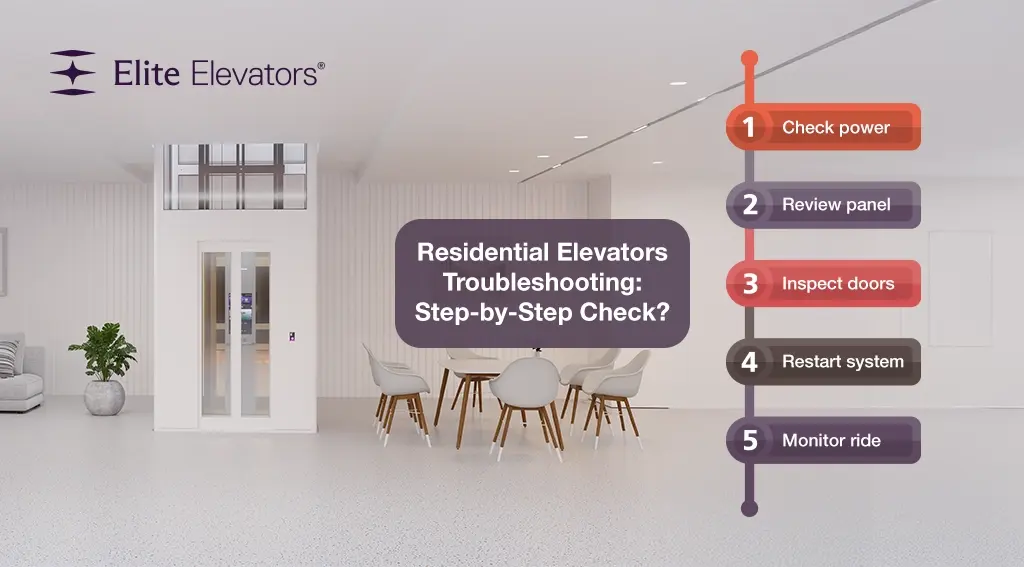
Step-by-Step Elevator Troubleshooting Guide
Step 1: Check Power Supply
Ensure the elevator is receiving proper electrical input.
Step 2: Review the Control Panel
Look for warning signals or residential elevator error codes.
Step 3: Inspect Doors and Sensors
Make sure nothing is blocking proper closure.
Step 4: Restart the System
A simple reset can fix temporary glitches.
Step 5: Monitor Performance
Observe movement, speed, and sound for patterns.
Understanding Residential Elevator Error Codes
Modern elevators come equipped with diagnostic systems that display residential elevator error codes.
These codes help you:
- Identify the exact issue
- Avoid guesswork
- Take faster corrective action
For example:
- Door-related errors
- System overload alerts
- Maintenance reminders
Understanding these codes can significantly simplify elevator troubleshooting.
When Should You Call a Professional?
While basic troubleshooting is helpful, some situations require expert attention:
- Repeated system failures
- Sudden stops between floors
- Persistent unusual noise
- Visible wear or damage
Professional servicing ensures safety and prevents further damage.
How Maintenance Reduces Elevator Problems
Preventive maintenance is the key to avoiding frequent problems with residential elevators.
Benefits include:
- Early issue detection
- Smooth performance
- Reduced repair costs
- Extended lifespan
A well-maintained elevator rarely faces unexpected breakdowns.
Lifestyle Benefits of Proper Troubleshooting
Understanding residential elevator troubleshooting isn’t just technical—it directly impacts your lifestyle.
When your elevator works smoothly:
- Your daily routine stays uninterrupted.
- Elderly family members move safely
- You avoid unexpected repair costs
- Your home remains modern and functional.
It’s about convenience, comfort, and peace of mind.
Why Choosing the Right Elevator Matters
The type of elevator you choose plays a big role in how often issues occur. Modern systems, like those offered by Elite Elevators, are designed with the following:
- Fewer moving parts
- Smart diagnostics
- Easy maintenance
This makes troubleshooting simpler and improves long-term reliability.
Conclusion
Residential elevators are built for comfort—but maintaining them is key to enjoying that comfort every day. By understanding residential elevator troubleshooting, you can quickly identify issues, take the right steps, and avoid unnecessary downtime.
FAQs
1. What are common problems with residential elevators?
Common issues include power failures, door misalignment, unusual noises, and jerky or uneven movement. These problems are usually minor and can often be identified early through regular observation and basic troubleshooting steps.
2. How do I reset my home elevator?
You can reset your home elevator by turning off the main power supply, waiting for a few minutes, and then restarting the system. This helps clear temporary glitches and restores normal operation in many cases.
3. What do residential elevator error codes indicate?
Residential elevator error codes indicate specific issues such as door faults, overload conditions, or system malfunctions. These codes help you quickly understand the problem and decide whether it can be resolved easily or needs professional attention.
4. Can I troubleshoot elevator problems myself?
Basic troubleshooting, such as checking the power supply or clearing door obstructions, can be done yourself. However, for technical issues or recurring problems, it is always safer to consult a professional technician.
5. How often should a home elevator be serviced?
A home elevator should be serviced at least once or twice a year to ensure smooth performance, safety, and long-term reliability. Regular maintenance helps prevent unexpected breakdowns and reduces repair costs.
Note: * Prices listed are starting rates, exclude applicable taxes, and may vary based on customization.



Nilesh Thapa
This is one of the most practical guides I’ve read on residential elevators troubleshooting. The step-by-step breakdown makes it easy to understand even for non-technical users. I especially liked the section on common elevator issues at home and how to handle them safely. Very informative and useful!
Karthik Subramaniam
Great article! The way you’ve explained residential elevators error issues and their solutions is impressive. I found the troubleshooting tips very practical, especially for minor problems. This guide makes it easier to troubleshoot residential elevators without panic.
Reshma Sheikh
Very informative post! Understanding problems with residential elevators can be confusing, but this article simplifies everything. The DIY elevator troubleshooting tips are clear and actionable. Definitely a must-read for homeowners.
Mohd Arif
This blog provides excellent insights into elevator problems fix techniques. I liked how the guide explains both causes and solutions. The DIY elevator troubleshooting section is especially helpful for beginners.