

 Add Elite as Preferred


A one-person home lift by Elite Elevators is a compact, safe, and stylish home mobility solution designed for small spaces, offering quick installation, energy efficiency, and reliable performance for daily use.
New trends are emerging in the Indian home construction industry with taller villas, more duplex homes, and an increased focus on comfort, accessibility, and long-term function. One innovation that’s revolutionising how we live is the one-person home lift.
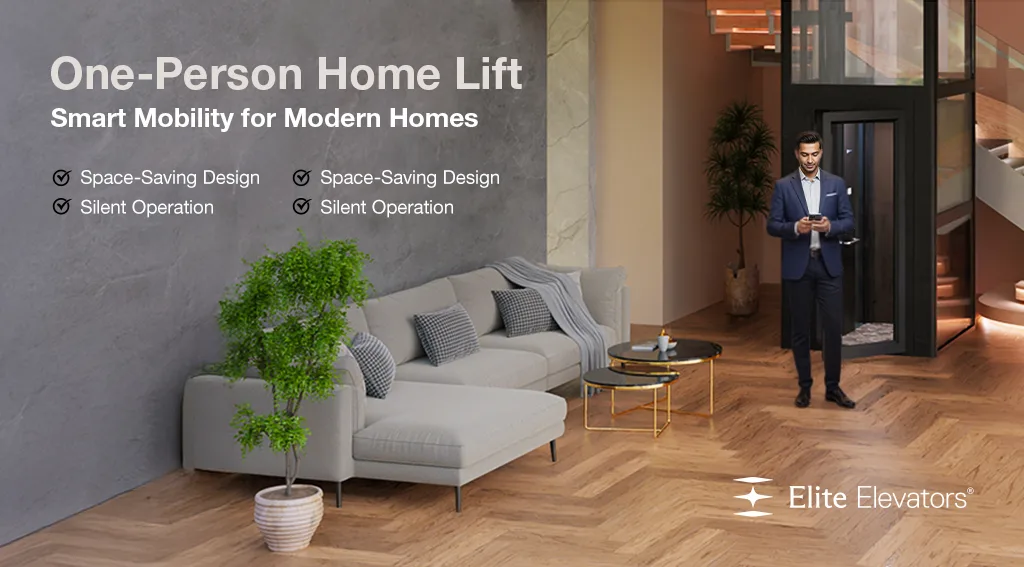
Table of Contents
- What is a One-Person Home Lift?
- How are one-person home lifts designed to fit small spaces?
- What safety features are included in one-person home lifts?
- What is the installation process of a one-person home lift?
- Which factors affect the cost of installing a one-person home lift?
- Advantages and Disadvantages of One-Person Home Lifts
Many people still think of a one-person home lift as a luxury for enormous homes; however, home lifts can provide an everyday lift solution. The one-person home lift can help the elderly move comfortably between floors, assist individuals with mobility limitations, or simply provide unequalled convenience that restores independence to families.
Elite Elevators has redefined the compact lift when it comes to premium residential solutions in India. Their innovative designs combine superior European engineering and elegant contemporary designs with cutting-edge safety features that meet the specific needs of the Indian home.
This blog will explore everything you need to know about a one-person home lift, from design and safety considerations to installation and pricing.
What is a One-Person Home Lift?
One-person home lifts are specially designed home mobility solutions intended to carry a single individual between floors within a private residence, unlike commercial or public elevators. They are typically engineered with the following four key features:
– For limited space in your home
– To avoid requiring extensive alterations or additions to your home
– To be very quiet when operating
– To have additional safety features because of being located in your own home
These are typically best suited for duplexes, villas, bungalows & other “retrofit” projects where homeowners are interested in making changes to their homes so that they have accessibility without having to do major renovations.
Elite Elevators have modern lift systems, which are very attractive because they do not require large, deep pits or independent machine rooms in homes, allowing them to be installed quickly and easily into both new & existing homes.
How are one-person home lifts designed to fit small spaces?
Single-person elevators are often misunderstood as being “smaller versions” of commercial lifts; however, the truth is that they have been designed specifically for people needing help getting from floor to floor within the home.
1. Space-Optimised and Efficient Engineering
A small elevator lift for homes is thoughtfully engineered to utilise minimal floor space while maintaining full functionality and safety. It can typically be installed:
• Near staircases
• Within designated shaft spaces
• Along structural walls
• In efficiently planned residential layouts
Because these lifts operate using machine-room-less technology and do not require bulky overhead machinery, they integrate seamlessly into residential Indian homes while preserving structural integrity and interior aesthetics.
2. Machine-Room-Less Technology
A one-person home lift has no machine room; therefore, it requires less space than a conventional elevator and can be installed in a house where the owners do not want a change in structure.
3. Aesthetic Integration
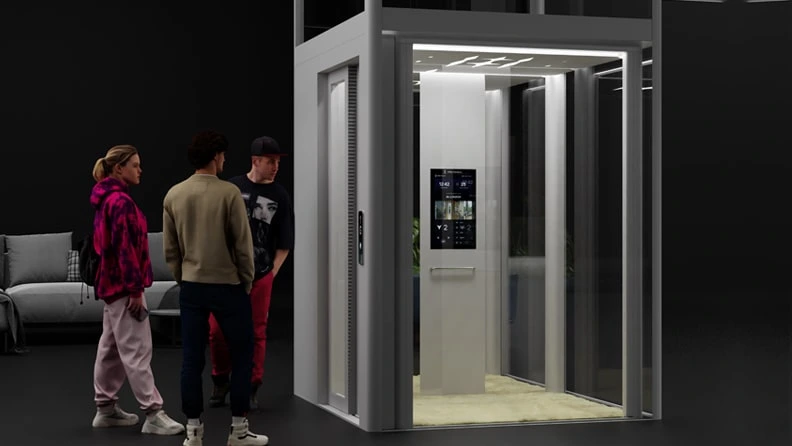
Design is as important as functionality. A one-person home elevator today is crafted to complement interiors. Features may include:
- Premium cabin finishes
- Soft ambient lighting
- Sleek control panels
- Panoramic glass-integrated options
- Custom colour themes
Rather than appearing industrial, the lift becomes a design statement within the home.
4. Smooth and Silent Operation
Today’s one-person elevators are designed to operate very quietly. This way, when your lift is operating smoothly, you can maintain the tranquillity of your home.
5. Smart Controls
The latest models available have:
– Touchscreen control
– Automatic floor stops
– Lockout for unauthorised users
– Mobile app integration on certain high-end designs
With these options, you can turn a single-person residential lift into a piece of smart home furniture.
What safety features are included in one-person home lifts?
When installing a lift inside a private residence, safety becomes non-negotiable. Elite Elevators integrates advanced European safety standards into every single person elevator model.
1. Compliance with EU Safety Standards: One-person lifts installed in homes are subject to EN 81-41 safety regulations to ensure service and reliability with international standards.
2. Emergency Lowering System: Lifts will automatically lower down to the nearest floor in the event of a power failure. Therefore, you won’t have to worry about becoming stuck in mid-flight during a power failure.
3. Backup Batteries: The home one-person lift has a backup battery that will allow the lift to operate under controlled conditions in a power failure situation.
4. Obstruction Detection Sensors: The lift’s door has an obstruction sensor that will detect an obstruction or a person in the way of the door and will prevent the door from closing. This will be most important for elderly and child users.
5. Alarm / Communication Systems: The lift is equipped with an emergency alarm and a communication system to ensure you are able to call for help if necessary.
6. Automatic Braking Systems: Single-passenger elevators for residential homes contain multiple layers of braking systems to provide safe stopping regardless of the conditions encountered. Safety involves technology, but also includes confidence. A well-engineered single-passenger home elevator will give individuals and families daily peace of mind.
What is the installation process of a one-person home lift?
One of the most common concerns homeowners have is installation complexity. Fortunately, installing a home lift for one person is simpler than many expect.
A Step-by-Step Guide for Installing A Home Lift.
Step 1 – Site Assessment
Engineers will assess your property by undertaking a detailed examination of the house and the site, including:
- Space available to install
- Height of the ceiling
- Floor strength/Load-bearing capacity
- Electrical connections/Services
They will utilise these observations to guarantee the correct installation of your single passenger lift model on your property.
Step 2 – Custom Design
Using information gathered during the site assessment phase, Designers will create a custom plan specific to the site conditions. Since the majority of modern lifts do not have to have deep pits or machine rooms, there will be very little impact on your existing structure when installing your lift.
Step 3 – Structural Modifications
In the majority of cases, there will only be minor modifications required to the existing structure to permit the installation of your lift. As a result, small home elevators are an excellent choice for retrofitting/adding lifts into an existing home.
Step 4 – Installation and Assembly
Based on your custom design, your lift will be installed by Qualified Technicians, who will complete the following work:
- Lift Shaft Structure (if required)
- Lift Drive Mechanism
- Lift Car System
- Lift Electrical System
Step 5 – Testing and Commissioning of your new Lift
The following tests will be completed on your lift prior to being handed over to you by your Technician:
- Safety Inspection
- Load Test
- Operational Test
- Emergency System Test
The typical time frame to undergo the total installation process of a one-person home lift is within 2-3 weeks, depending on how ready the site is.
Which factors affect the cost of installing a one-person home lift?
The cost of a one-person home lift in India varies depending on several factors.
Key Cost Determinants
- Number of floors
- Custom cabin finishes
- Smart technology features
- Installation complexity
- Structural requirements
While a single-person elevator for a home is an investment, it adds significant functional and long-term value to a property.
Rather than viewing it as an expense, many homeowners consider it:
- A long-term mobility solution
- A safety enhancement
- A premium home upgrade
- A property value booster
Elite Elevators offers premium European-engineered solutions tailored to Indian residential needs, ensuring both safety and design excellence.
Advantages and Disadvantages of One-Person Home Lifts
Before making a decision, it’s important to evaluate both sides.
Advantages
- Enhanced Accessibility: A home lift for one person allows elderly family members to move independently without relying on stairs.
- Space Efficiency: A small elevator lift for homes occupies a minimal area.
- Minimal Structural Changes: Modern systems eliminate the need for deep pits and machine rooms.
- Increased Property Value: Homes with lifts are increasingly desirable in urban India.
- Future-Proof Living: Installing a single-person elevator today ensures your home remains accessible for decades.
Disadvantages
- Initial Investment: A high-quality one-person home elevator requires an upfront cost.
- Regular Maintenance: Like any mechanical system, periodic servicing is necessary.
Despite these considerations, most homeowners find that the benefits of a single-person lift for home far outweigh the limitations.
Conclusion
A one-person home lift is no longer just a luxury addition — it is a thoughtful investment in comfort, independence, and future-ready living. With a compact design, advanced safety systems, elegant aesthetics, and minimal installation requirements, a single-person elevator for a home is perfectly suited to Indian residences.
Elite Elevators brings world-class engineering and refined designs to the Indian market, offering solutions that prioritise safety, sophistication, and seamless integration.
Whether you are planning a new villa or upgrading your existing duplex, installing a home lift for one person ensures that every level of your home remains accessible, elegant, and convenient for years to come.
FAQ’s
Q1: What is the required footprint for a home elevator for a one-person home lift?
A single-person home elevator is engineered for efficient space utilisation and integrates seamlessly within a properly constructed shaft. Elite Elevators systems are designed without the need for a deep pit or a separate machine room, ensuring streamlined installation while maintaining structural stability and certified safety standards.
Q2: Can a single-person home elevator be safely used by the elderly?
Yes. A single-person home elevator is equipped with an automatic emergency lowering system, battery backup, advanced fault-detection sensors, and reliable braking mechanisms to ensure safe and uninterrupted operation at all times.
Q3: What is the estimated installation time of a home elevator for one person?
A one-person home elevator generally takes 2-3 weeks to install, depending on the site where it will be located and how much customisation is requested.
Q4: Will a home elevator for one person still function during power outages?
Yes. Most new single-person home elevators are equipped with battery backup to provide a safe descent in case of power loss.
Q5: Can I customise the elevator I wish to install in my home?
Yes. A one-person home elevator can be finished with a variety of finish materials, cabin lighting and other design options that will complement your home’s interior.
Note: * Prices listed are starting rates, exclude applicable taxes, and may vary based on customization.


Rajeev Thakur
This blog gave a very clear understanding of how a one-person home lift works in modern houses. I especially liked the explanation of the one-person home lift installation process and safety features. It’s helpful for homeowners who want a compact and practical mobility solution inside their homes.
Poonam Rawat
Very well-written content about single-person lifts for home price factors and installation steps. Many people don’t realize how practical a one-person home lift can be for daily convenience and accessibility. This blog makes the concept easy to understand.
Danish Khan
This article helped me understand the benefits of installing a single-person home lift in modern houses. The points about compact design, quiet operation, and safety single-person home lift features make it clear why more homeowners are choosing this solution.
Kavita Yadav
I appreciate how clearly this blog explains the concept of a one-person home lift. The information about space optimisation and machine-room-less technology makes it easier to understand why a single-person lift for home is suitable for modern houses.